


The digital world is changing at a fast pace. With emerging generative AI tools like ChatGPT, Google’s Search Generative Experience (SGE), and Perplexity, search rules are evolving. Traditional SEO has reigned supreme on the web for years. Keywords, backlinks, and technical audits were the bedrock of any search strategy.
But today, AI search optimization is dominating these other factors, forcing businesses and marketing agencies to rely on a new playbook.
So what is AI search optimization, and more importantly, how does it differ from good ol’ SEO? And, perhaps more importantly: How can you win in this new era?
Traditional SEO is the process of optimizing content to rank as high as possible in search engine results pages (SERPs). It focuses on:
This approach has evolved over two decades. It works well in situations where 10 blue links are the primary way people find and access information.
Generative AI is turning it all on its head. Rather than present a list of ranked websites, AI search engines offer direct responses to queries: Services like ChatGPT, and Gemini employ large language models to combine information from multiple sources and often summarize and synthesize it all in a way that doesn’t require users to click through.
That’s where AI SEO can take over.
AI Search Optimisation is the art of optimizing content and digital assets to be surfaced and included in AI-provided answers. It’s not about just ranking in the SERPs, but being quoted, referenced, or cited by AI models that are producing content or providing answers.
| Feature | Traditional SEO | AI Search Optimization |
|---|---|---|
| Target Audience | SERPs (Google, Bing) | AI Chatbots, Generative Engines |
| Content Structure | Keyword-driven | Context and intent-driven |
| Metrics | Rank, CTR, Traffic | Citation in AI answers, brand visibility |
| Format | Webpages, blogs, meta tags | Structured content, FAQs, knowledge bases |
| Optimization Focus | Search Engines Crawlers | Large Language Models (LLMs) |
| Discovery Mode | Link-based | Prompt-based or conversational |
| Interaction | One-time search | Multi-turn conversation |
Write in a Q&A format. Use subheadings like “What is..” “How does it work..” “Why should..”. Break up complex ideas into digestible chunks that AI can easily extract.
Markup your content with structured data: FAQs, How-Tos, Product Specs, Authors, and other content types. It just makes it easier for AI to grasp context and pull relevant information.
Make sure your brand and entities (people, products, services) are in databases. This raises the likelihood of being mentioned by AIs responding to these training sets.
Google’s search GPT experiments commonly extract content from pages that are snippet-friendly. Target zero-position tactics: Cogent, succinct responses; definitions; statistics; and bullet points.
AI models will tend to be biased towards content that shows deep authenticity and credibility. Display Author BIOS, Cite Sources, Refer to High Quality References.
AI tools scour through not only text but also videos, podcasts, and visuals. Make all content machine-readable by employing transcripts, alt text, and captions.
Leverage tools that monitor brand mentions in AI answers (e.g. ChatGPT citations, Bing Chat summaries). Maximize depending on whether it’s included or excluded.
Though traditional SEO is far from being dead, it has started to change. The best digital strategies include:
It’s not just about being found anymore, search — it’s about being chosen by the AI that curates the answer.
In today’s era of generative engines, sticking to just traditional SEO isn’t enough. It’s more like losing an opportunity. AI search optimization is not just another trend but the next phase of online visibility. Those who are leveraging these powerful tools will dominate tomorrow’s digital landscape.
So, are you ready to future-proof your content strategy? If yes, then get in touch with experts at Autus Digital Agency an leading SEO company in India today. Let us help you improve your brand visibility with AI SEO.

Gaurav Madan, Founder and CEO of Autus Digital Agency, is a pioneering figure in digital marketing with experience of 20+ years. His expertise revolutionizes online marketing strategies and leverages digital platforms for business growth. Gaurav’s consumer-centric approach and strategic vision propel diverse industries to position online presence and dominate.


Search engine optimization has changed dramatically over the past few years. Google is using AI to power search results, user intent is more important than exact-match keywords, and competition is growing in almost every niche.Google is using AI to power search results, user intent is more important than exact-match keywords, and competition is growing in […]
.....
Search engine optimization has advanced far past conventional key-word stuffing and one-way link technology. In 2026, SEO is deeply intertwined with artificial intelligence, person reason modeling, semantic search, and predictive analytics. Businesses throughout the globe are more and more turning to India as a hub for subsequent-technology search engine marketing outsourcing services. The usa has placed itself as […]
.....
SEO is considered to be the most critical element for digital success. SEO is no longer limited to keyword placement and creating backlinks. Contemporary SEO entails technical optimization, content strategy, competition research, and monitoring. Due to these intricate processes, most companies choose to outsource their SEO tasks rather than handle them within their organizations. The […]
.....
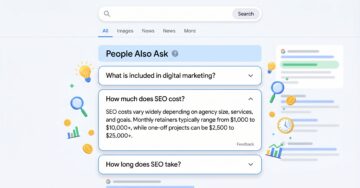
AI Search Engine Ranking Tracking Tools 2026 : The New Way to Measure Visibility Search is no longer what it used to be. Today, people don’t just “Google” things—they ask questions to AI tools and expect direct answers. Platforms like ChatGPT, Google AI Mode, Perplexity, and Gemini are changing how content is discovered, ranked, and […]
.....
When people use Google to search for anything nowadays, they frequently come across an option known as the People Also Ask box. This is where Google provides you with several questions related to your search topic. It is not there by accident because it is part of how people research online and provides significant benefits […]
.....
Your website is built meticulously. You have put in all your service offerings and contact information, and perhaps shared the website URL too. However, if your website not showing up on Google search, it can be frustrating when your company doesn’t appear anywhere. This is a scenario that is very common today in 2026. Thankfully, […]
.....
There is no chance your web pages will appear in search results without being indexed by Google. This implies that you might lose out even though the content you have created is very useful and relevant. Knowing how to submit your URL to Google Search can help you rank better. This procedure is often performed […]
.....
Did you know that over 90% of online experiences start with search engines? If this fact surprised you, then let us also tell you that only Google accounts for over 68% of all online searches. Websites that appear on the first page of Google search results get over 91.5% of traffic. These statistics tell the […]
.....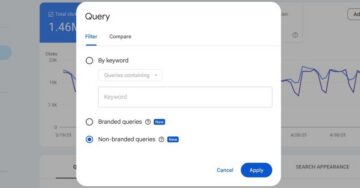
Google has rolled out its branded queries filter in Search Console to all eligible sites, simplifying how SEOs analyze branded versus non-branded traffic. This native tool replaces manual regex hacks, making performance reporting more efficient for eCommerce and health sites. Key Takeaways Universal Access: As of March 10, 2026, the AI-powered filter is now live […]
.....
If you work in marketing, you’ve probably noticed something big is happening in search. Algorithms are no longer just about keywords, links, and ranking signals. They’re learning to understand intent, context, and even conversation. In short, artificial intelligence has officially changed the game. One event that captured everyone’s attention recently was Semrush Marketing Countdown- a […]
.....
Every year, HubSpot’s Inbound conference sets the tone for where marketing is heading next. Marketers, business leaders, and innovators gather to share insights, explore emerging tools, and reimagine how brands connect with customers. This year’s event, HubSpot Inbound 2025, feels especially transformative. The spotlight is squarely on artificial intelligence and how it is reshaping not […]
.....
Search engine optimization (SEO) plugins are essential for improving your WordPress website’s ranking and visibility. Whether you’re running a business site, blog, or eCommerce store, the right SEO plugins streamline critical tasks like content optimization, technical SEO, generating sitemaps, and boosting site speed. As a Top Search Engine Optimization Company in India, we understand that […]
.....
The digital era has brought many changes in how people discover information. Initially, we all used to turn to search engines for any information, then came social media, and now we are at the edge of another shift: AI discovery. It was only a few months into this year that we saw traffic from AI […]
.....
SEO is an essential part of modern digital marketing, and outsourcing your SEO can be a strategic step—if you get it right. A good SEO reseller company can increase the traffic to your site, provide a higher number of leads, and improve your brand’s visibility. However, not all SEO outsourcing partners are the same, and choosing […]
.....
Outsourcing your SEO can be a great business decision that allows you to leverage professional skillsets, cut costs, and get your site to rank better, and faster. But like all outsourced services, SEO carries its own set of challenges. Sloppy work and black-hat practices driven by shortcuts and misinformation can taint your site’s favorability and organic visibility. Clear […]
.....
Have you ever wondered why most small and medium-sized digital marketing agencies outsource their SEO to other expert SEO agencies? The Search Engine Optimization market is growing rapidly, and more and more businesses are realizing its importance for overall growth. However, achieving the desired client results within deadlines becomes a difficult task if you have […]
.....
In today’s competitive digital world, providing exceptional client deliverables is crucial. SEO resellers need to deliver detailed reports with all key performance indicators to maintain transparency with the clients. To achieve this, you need efficient SEO reseller software that can improve the client deliverables and communicate the progress in simple terms. In this blog post, […]
.....
In today’s digital business environment, all companies, regardless of their size, need to keep up with the ever-evolving online marketing landscape to stay competitive. Search Engine Optimization (SEO) is one of the most widely used online marketing strategies for establishing an online reputation. According to a study, businesses are most likely to spend over $80 […]
.....
Did you know that nearly 97% of users search online to find a local business? This data emphasizes the importance of ranking higher for local search results. Local SEO is a powerful tool to level up your game. However, not all businesses have the expertise and efficient resources to offer top-notch local SEO services, especially […]
.....
Did you know that companies that outsource their SEO gigs save nearly 30% of costs as compared to handling an in-house team? SEO is a powerful tool but not every business has the expertise of handling it in-house. That’s why hiring an expert SEO reseller in India is worthwhile. It can give you a return […]
.....


