


Search is no longer what it used to be.
Today, people don’t just “Google” things—they ask questions to AI tools and expect direct answers. Platforms like
ChatGPT, Google AI Mode, Perplexity, and Gemini are changing how content is discovered, ranked, and presented.
This shift means one thing:
To stay visible, businesses now need a smarter way to measure performance—this is where AI search engine ranking tracking tools come in.
An AI search ranking tracking tool helps you understand how your content performs inside AI-generated results, not just traditional search listings.
Instead of only tracking keyword rankings, these tools go deeper. They help you answer questions like:
In simple terms, these tools show whether your content is actually being used by AI—not just indexed.

Search behavior has fundamentally changed. Recent industry data indicates that a significant share of queries—often estimated around 40–50%—now trigger AI-generated summaries or “AI Overviews,” and these results typically occupy the most prominent position on the page. This shift reduces the visibility of traditional organic listings and reshapes how users interact with search results.
In practical terms, this means:
As AI systems like ChatGPT, Google AI Mode, Perplexity AI, and Gemini increasingly curate and summarize information, the goal of SEO is evolving.
It’s no longer just about achieving high rankings—it’s about becoming a trusted, citable source that AI systems choose to include in their answers.

Businesses are no longer optimizing just for search engines—they’re optimizing for answers in LLMs.
AI tracking tools help with:
In short, they bridge the gap between traditional SEO and AI-driven discovery.
Choosing the right AI ranking tool isn’t about picking the most popular one—it’s about choosing the one that actually helps you measure and improve AI visibility.
Not all tools track real AI visibility.
A good tool should track:
AI visibility tools focus on metrics like mentions, links, and position inside AI summaries—not just keyword rankings
Your audience isn’t using just one AI tool.
Choose a tool that tracks across:
The best tools monitor visibility across multiple AI systems in one dashboard
Keywords are evolving into prompts.
A strong tool should:
This replaces traditional keyword rank tracking in AI SEO.
AI search is dynamic—results change based on context.
Your tool should:
Historical insights help refine content strategy continuously
Most tools show data. Few tell you what to do.
Choose one that gives:
The best tools provide actionable recommendations, not just reports
You’re not competing for rankings anymore—you’re competing for AI answers.
Look for tools that:
This helps you reverse-engineer AI rankings.
AI tools vary a lot in pricing.
Check:
Don’t just choose the cheapest—choose ROI-driven tools.
Your AI tool shouldn’t work in isolation.
It should integrate with:
Unified dashboards improve efficiency and decision-making
Even powerful tools fail if your team can’t use them.
Check:
UX matters when scaling across teams
AI search is still evolving—your tool should too.
Look for:
The right tool should grow with AI, not become outdated.
| Tool | Core AI tracking strengths | Best for |
|---|---|---|
| OtterlyAI | Tracks brand mentions, website citations, and prompt performance across platforms like ChatGPT, Perplexity, Google AI Overviews/AI Mode, and Microsoft Copilot. It also supports country-level monitoring and competitive tracking. | Brands and agencies that want broad cross-platform AI visibility monitoring with prompt-based tracking and multi-market reporting. |
| Peec AI | Focuses on custom prompt tracking, visibility trends over time, competitor benchmarking, and identifying which sources/citations influence AI answers. It has dedicated tracking for tools like Gemini and Google AI Mode. | Marketing teams that want clean, focused AI visibility analytics with strong prompt-level and citation insight. |
| Ahrefs Brand Radar | Tracks how brands appear in AI search across 350+ million search-backed prompts, with share of voice, top cited pages/domains, and custom prompt tracking. | Teams that want large-scale AI visibility benchmarking backed by a massive prompt dataset and Ahrefs’ wider SEO ecosystem. |
| Semrush AI Visibility Toolkit | Offers brand visibility, mentions, sentiment, competitor analysis, prompt discovery, daily tracking for important prompts, and AI crawler/technical audits. | Businesses that want an all-in-one AI + SEO workflow inside a familiar enterprise marketing platform. |
| Hall | Monitors brand mentions in AI conversations, sentiment, citations, and competitive positioning. It also includes agent/crawler analytics and visibility into how AI systems use your site. | Brands that want answer-engine optimization insights plus a stronger view into AI agent behavior and conversational discovery. |
The best AI ranking tool is not the one with the most features…
It’s the one that helps you answer:
Because in 2026:
SEO = Visibility in AI answers
Not just positions in search results
AI is not just changing search—it’s redefining it.
Going forward:
Businesses that adapt early will have a major advantage.
Learn more about AI SEO services
AI search ranking tracking tools are no longer optional—they’re essential.
If your content isn’t being picked up by AI, you’re missing out on a huge share of visibility.
The brands that win in this new era will be the ones that:
Because in today’s search landscape, it’s not just about ranking…
It’s about being the answer.
AI search ranking tracking tools are platforms that help measure how your content performs inside AI-generated results, not just traditional search rankings. They track things like brand mentions, citations, and visibility in AI answers instead of only keyword positions.
Traditional SEO tools mainly track keyword rankings and organic traffic. AI ranking tools go beyond that and show whether your content is being used, cited, or mentioned in AI-generated responses across platforms.
AI-generated answers now appear at the top of search experiences and often replace the need to click multiple links. If your content is not included in these answers, your visibility drops even if you rank well in traditional search.
Most AI tools focus on: Brand mentions in AI answers Citations and links used by AI Prompt-based visibility Share of voice across AI platforms These are different from standard keyword ranking metrics.
Good AI tracking tools monitor multiple platforms, including ChatGPT, Google AI Overviews, Perplexity AI, and Gemini. Some also include Microsoft Copilot and other emerging tools.
Prompt tracking is the process of monitoring how your content appears for specific user queries (prompts) in AI tools. It works similarly to keyword tracking but is based on natural language questions instead of short search terms.
Yes, many AI tools show how competitors are performing in AI-generated answers. They help identify where competitors are being cited and where your brand is missing, which helps improve strategy.
They are becoming essential. Since AI answers are changing how users interact with search, relying only on traditional SEO tracking may not give the full picture of your visibility.
Key features include: AI mention and citation tracking Multi-platform coverage Prompt tracking Historical data and trends Actionable insights (not just raw data) Without these, the tool may not provide real AI visibility insights.
Yes, they help you understand what type of content AI systems prefer and cite. This allows you to adjust your content to increase chances of being included in AI-generated answers.

Gaurav Madan, Founder and CEO of Autus Digital Agency, is a pioneering figure in digital marketing with experience of 20+ years. His expertise revolutionizes online marketing strategies and leverages digital platforms for business growth. Gaurav’s consumer-centric approach and strategic vision propel diverse industries to position online presence and dominate.

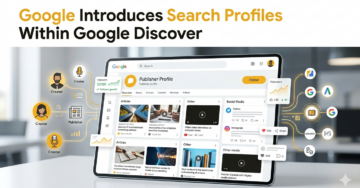
Google Expands Publisher Visibility with Search Profiles Google has officially begun rolling out Search Profiles within Google Discover in the United States, introducing a new way for publishers, creators, and brands to establish a stronger presence across Google’s ecosystem. The feature creates dedicated publisher landing pages that allow users to follow content sources, explore recent […]
.....
Why SEO Keyword Research Is the Foundation of Search Success In the modern search landscape, success is no longer about simply inserting keywords into content. It is about understanding what users are searching for, why they are searching for it, and how you can deliver the most relevant and valuable answer at the right moment. […]
.....
: Marketing companies are always under pressure to come up with more effective strategies for their clients, all the while juggling various projects simultaneously. As the expectations of their clients keep rising, most firms find it increasingly challenging to take care of all SEO-related aspects themselves. Increased staffing and costly tools may result in higher […]
.....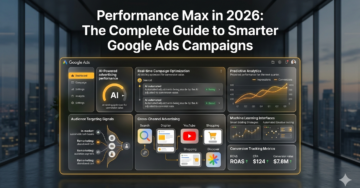
The modern digital advertising ecosystem has evolved significantly, and businesses now rely heavily on data-driven advertising systems like Google Ads to achieve scalable growth. This guide provides a structured, informational breakdown of how to build smarter, performance-oriented campaigns designed to improve ROI, optimize targeting, and maximize conversions across competitive industries. The focus is on practical […]
.....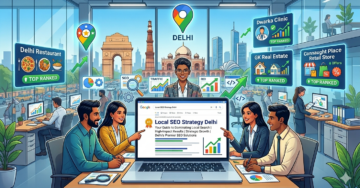
Delhi is one of the most competitive markets in India in terms of doing business. No matter what type of service you offer in your company, whether it’s restaurants, law firms, medical clinics, real estate agencies, educational institutes, or retail stores, people are now turning to the internet for help locating these services. Your company […]
.....
Search engine optimization has evolved far beyond rankings and traffic numbers. In 2026, businesses are investing heavily in SEO because organic visibility directly impacts revenue, lead generation, brand authority, and long-term digital growth. However, one question still dominates boardrooms, marketing meetings, and client discussions: How do you actually measure SEO ROI? SEO ROI, or return […]
.....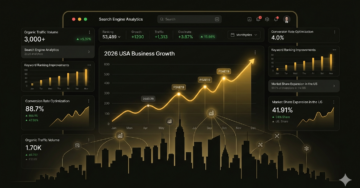
SEO Companies in the USA Search engine optimization has become one of the most critical digital marketing channels for businesses aiming to grow online visibility and revenue. In the USA, SEO companies play a major role in helping brands improve rankings, attract qualified traffic, and convert visitors into customers. With search algorithms becoming more advanced […]
.....
Online presence is one key factor that can determine a business’s success in the modern age. Whether you are selling something or just promoting your brand name, having an effective SEO strategy would help you rank well. With customers checking for information online, SEO is a crucial strategy that should be taken seriously by all […]
.....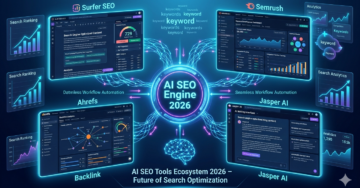
Introduction – The Rise of AI SEO in 2026 SEO in 2026 has changed tremendously from human-based optimization to a completely different landscape of using artificial intelligence to make decisions regarding SEO strategy. Companies are no longer merely competing for top positions in search engines based solely on creating compelling content or acquiring backlinks; they […]
.....
SEO is among the best business growth strategies in today’s market environment. Regardless of whether you own a start-up, e-commerce firm, SaaS provider, healthcare organization, or a local services firm, SEO can benefit your business in numerous ways, such as boosting visibility, bringing targeted traffic to your website, and driving quality leads. Companies that enjoy […]
.....
There has been an enormous increase in the demand for SEO services in recent times because companies have realized that search engine rankings play a crucial role in their ability to generate more sales and lead conversions. The growing pressure on digital marketing agencies to offer effective SEO services stems from this realization by various […]
.....
Today, SEO is considered the most essential investment in terms of digital marketing by all organizations. Whether it’s a local business, an e-commerce website, a software business, or even an enterprise-level business, having an online presence is necessary to get more visitors. In today’s world, however, SEO does not consist only of stuffing keywords into […]
.....
The modern-day organizations recognize the significance of SEO in creating online presence, gaining leads, and ensuring growth. Irrespective of whether it is an emerging organization, e-commerce, software-as-a-service firm, or a local business, the significance of ranking high on search engines has become crucial for reaching out to customers online. But, handling SEO activities within the […]
.....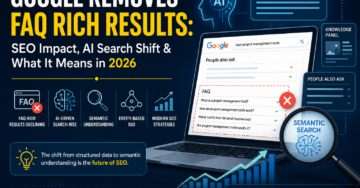
Google’s handling of FAQ rich results has become one of the most misunderstood developments in modern SEO. Many people describe it as a complete removal, but the reality is more nuanced. FAQ structured data still exists under Schema.org and continues to be supported by Google Search Central, yet its visibility in search results has been […]
.....
SEO has evolved into one of the most complex digital growth systems in modern marketing. It is no longer limited to ranking websites on Google through keywords and backlinks. SEO by 2026 includes traditional search engines, AI-generated answer systems, and semantic knowledge networks that understand user intent, not just search queries. This transformation has changed […]
.....
Search engine optimization has changed dramatically over the past few years. Google is using AI to power search results, user intent is more important than exact-match keywords, and competition is growing in almost every niche.Google is using AI to power search results, user intent is more important than exact-match keywords, and competition is growing in […]
.....
Search engine optimization has advanced far past conventional key-word stuffing and one-way link technology. In 2026, SEO is deeply intertwined with artificial intelligence, person reason modeling, semantic search, and predictive analytics. Businesses throughout the globe are more and more turning to India as a hub for subsequent-technology search engine marketing outsourcing services. The usa has placed itself as […]
.....
SEO is considered to be the most critical element for digital success. SEO is no longer limited to keyword placement and creating backlinks. Contemporary SEO entails technical optimization, content strategy, competition research, and monitoring. Due to these intricate processes, most companies choose to outsource their SEO tasks rather than handle them within their organizations. The […]
.....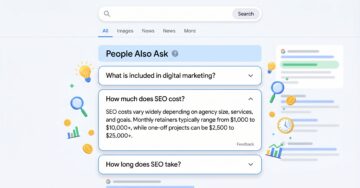
When people use Google to search for anything nowadays, they frequently come across an option known as the People Also Ask box. This is where Google provides you with several questions related to your search topic. It is not there by accident because it is part of how people research online and provides significant benefits […]
.....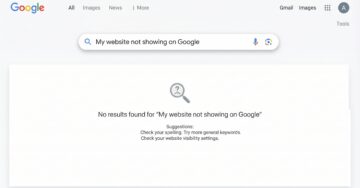
Your website is built meticulously. You have put in all your service offerings and contact information, and perhaps shared the website URL too. However, if your website not showing up on Google search, it can be frustrating when your company doesn’t appear anywhere. This is a scenario that is very common today in 2026. Thankfully, […]
.....


