


Businesses now measure SEO ROI through conversions, revenue, engagement, and long-term organic growth instead of rankings alone.
Search engine optimization has evolved far beyond rankings and traffic numbers. In 2026, businesses are investing heavily in SEO because organic visibility directly impacts revenue, lead generation, brand authority, and long-term digital growth. However, one question still dominates boardrooms, marketing meetings, and client discussions: How do you actually measure SEO ROI?
SEO ROI, or return on investment, is the process of calculating the actual business value generated through SEO activities compared to the money, time, and resources invested. Modern SEO is no longer only about keyword positions. Businesses now evaluate SEO based on conversions, customer acquisition cost, revenue growth, engagement quality, and lifetime customer value.
This shift has made SEO measurement more advanced and data-driven than ever before. Brands are now tracking organic performance across multiple channels including search engines, AI-driven search experiences, voice search, and content discovery platforms. Because of this, traditional vanity metrics alone are no longer enough.
In this guide, you will understand how to measure SEO ROI in 2026, which metrics matter the most, how businesses calculate real SEO profitability, and why modern ROI tracking requires a combination of analytics, conversion data, and strategic business goals.

SEO ROI measures the business value generated through organic search compared to SEO investment costs.
SEO ROI refers to the measurable return a business receives from its search engine optimization efforts compared to the total investment made into SEO campaigns. In simple terms, it answers an important business question:
“Is SEO generating profitable business results?”
The concept sounds straightforward, but modern SEO ROI involves much more than simply counting website visitors. Businesses today measure ROI through lead quality, conversions, customer acquisition, revenue generation, and long-term organic visibility.
For example, if a company spends money on content creation, technical SEO, backlinks, optimization tools, and SEO specialists, the return is calculated based on how much revenue or business growth those efforts produce over time.
Unlike paid advertising, SEO typically produces delayed but compounding returns. This means the initial investment may take months before significant results appear, but once rankings stabilize, organic traffic can continue generating value without constant advertising spend.
In 2026, businesses no longer measure SEO only by rankings. They measure whether SEO contributes directly to revenue and sustainable business growth.
The digital marketing landscape in 2026 is significantly more competitive than previous years. AI-generated content, advanced search algorithms, voice search behavior, and personalized search experiences have changed how businesses approach SEO. As competition increases, measuring ROI becomes essential for making smarter investment decisions.
Companies are no longer satisfied with vague SEO reports showing keyword improvements without business impact. Executives now expect SEO teams and agencies to prove measurable financial value.
This is why SEO ROI tracking has become one of the most important aspects of digital marketing strategy.
Modern businesses use ROI analysis to:
Businesses want to know whether SEO is generating revenue more efficiently than paid advertising or social media marketing.
ROI data helps companies decide whether to increase SEO investment, scale content production, or improve technical optimization.
SEO delivers long-term value, but businesses need accurate ROI forecasting to plan future expansion strategies.
Companies compare SEO against PPC, email marketing, influencer marketing, and social media campaigns to determine the highest-performing channels.
SEO ROI analysis helps discover which pages, keywords, and search intents generate the highest revenue.
In 2026, SEO is treated as a business growth channel rather than only a traffic generation strategy.
At its core, SEO ROI is calculated using a simple business formula:
SEO\ ROI = \frac{Revenue\ from\ SEO – Cost\ of\ SEO}{Cost\ of\ SEO} \times 100
This formula helps determine whether SEO investment is profitable.
For example:
The ROI would be:
ROI = \frac{20000 – 5000}{5000} \times 100 = 300%
This means the business earned 300% return on its SEO investment.
However, modern SEO ROI calculations are more detailed because SEO contributes value in multiple ways beyond direct sales.
The challenge in 2026 is accurately attributing conversions to organic search journeys because users interact with multiple platforms before converting.
Measuring SEO ROI requires analyzing multiple performance indicators instead of relying on a single metric. Businesses now combine traffic, engagement, and conversion metrics to understand SEO effectiveness.
Organic traffic remains one of the foundational SEO metrics. It shows how many users arrive from unpaid search engine results.
However, traffic alone is not enough. High traffic without conversions provides little business value.
Conversion rate measures how effectively SEO traffic turns into leads or customers.
A page generating fewer visitors but higher conversions often delivers better SEO ROI than pages with massive traffic and low engagement.
CAC measures how much it costs to acquire a customer through SEO efforts.
CAC = \frac{Total\ SEO\ Cost}{Number\ of\ Customers\ Acquired}
Lower acquisition costs generally indicate stronger SEO profitability.
Keyword analysis helps identify which search queries generate actual business value.
Businesses now prioritize:
Modern SEO focuses less on vanity rankings and more on profitable keyword visibility.

GA4 helps businesses measure SEO performance through conversion tracking and user engagement analysis.
In 2026, Google Analytics and GA4 play a major role in SEO ROI tracking. Businesses use advanced event tracking and conversion attribution models to analyze organic user behavior.
GA4 helps businesses track:
Businesses can understand how users interact with content before converting.
GA4 measures:
Modern attribution models help determine how organic search contributes to conversions alongside other marketing channels.
E-commerce brands can directly measure:
This makes SEO reporting more accurate and business-focused than older analytics systems.
One of the biggest mistakes businesses still make is measuring SEO success only through keyword rankings. While rankings are important, they do not automatically guarantee revenue.
For example:
This is why SEO ROI measurement in 2026 focuses on business outcomes rather than visibility alone.
Modern SEO success is measured through:
Businesses that focus only on rankings often misunderstand actual SEO performance.
In 2026, measuring SEO ROI has become more complicated because search behavior has changed dramatically. AI-generated search summaries, featured snippets, voice search responses, and zero-click results now impact how users interact with search engines.
Users often receive answers directly on the search results page without clicking a website. This means businesses can no longer rely only on raw traffic numbers to evaluate SEO success.
Instead, modern SEO ROI tracking now includes:
Even when users do not click, appearing in AI search summaries increases brand recognition and authority.
Businesses now track how often pages appear in search results, even if click-through rates vary.
SEO often contributes earlier in the customer journey before users convert through another channel later.
Search engines increasingly evaluate brands as entities rather than just websites. Strong entity recognition improves long-term SEO value.
Because of AI-driven search experiences, SEO ROI in 2026 must account for both direct and indirect business impact.
For service-based companies, SEO ROI is often tied to lead generation rather than direct online sales. This requires different tracking methods compared to e-commerce businesses.
For example:
In these cases, organic traffic is valuable only if it generates qualified leads.
Businesses also track which landing pages generate the highest-quality leads.
For example:
A page targeting “best CRM software for small business” may produce fewer visitors than a broad informational blog but generate significantly higher revenue.
This is why modern SEO focuses heavily on search intent alignment rather than only traffic volume.
E-commerce SEO ROI measurement is more data-driven because purchases can usually be tracked directly.
Online stores measure:
Businesses analyze how much total revenue comes from unpaid search traffic.
Brands identify which products generate the highest SEO-driven sales.
This measures how effectively organic visitors turn into customers.
Some keywords bring higher-value customers than others.
SEO often brings highly intent-driven users who become long-term customers.
In 2026, successful e-commerce SEO strategies focus heavily on commercial-intent keywords, category page optimization, and structured product data.
Despite advanced analytics systems, SEO ROI tracking still has challenges because organic search journeys are rarely linear.
SEO takes time. Businesses may invest for months before seeing meaningful returns.
Unlike paid advertising, SEO usually produces delayed but compounding growth.
A customer may:
In such cases, determining SEO’s exact contribution becomes difficult.
Search engine algorithm changes can impact rankings and traffic unexpectedly.
This makes short-term ROI calculations unreliable if viewed without long-term context.
Many businesses close deals offline through phone calls or meetings, making SEO attribution more complex.
Advanced CRM integration is often required for accurate measurement.
Modern SEO measurement relies heavily on analytics and tracking platforms.
Used for:
Used for:
Used for:
Used for:
Businesses now integrate CRM systems with SEO reporting to track:
Combining SEO data with business revenue data creates more accurate ROI reporting.

SEO creates compounding long-term business growth compared to short-term advertising campaigns.
One of the most important aspects of SEO measurement is understanding the difference between short-term and long-term returns.
Short-term SEO gains may include:
However, these results may fluctuate due to competition or algorithm changes.
Long-term SEO value is where the real profitability appears.
Over time, SEO builds:
Unlike paid ads, high-performing SEO content can continue generating revenue for years after publication.
This is why many businesses view SEO as a long-term digital asset rather than a short-term campaign.
Improving SEO ROI requires more than increasing traffic. Businesses must focus on conversion efficiency, search intent alignment, and user experience optimization.
Keywords with buying intent usually generate stronger conversions.
Helpful, experience-driven content performs better in modern search systems.
Fast-loading, mobile-friendly websites improve engagement and conversions.
Covering topics deeply increases trust and long-term ranking stability.
Businesses should continuously analyze:
SEO success in 2026 depends heavily on combining technical optimization with business-focused strategy.
Measuring SEO ROI in 2026 is no longer limited to rankings or traffic numbers. Modern SEO measurement focuses on business growth, conversion quality, customer acquisition, and long-term profitability.
Businesses today evaluate SEO through:
As search engines evolve with AI-driven experiences and changing user behavior, ROI tracking has become more advanced and strategic than ever before.


SEO Companies in the USA Search engine optimization has become one of the most critical digital marketing channels for businesses aiming to grow online visibility and revenue. In the USA, SEO companies play a major role in helping brands improve rankings, attract qualified traffic, and convert visitors into customers. With search algorithms becoming more advanced […]
.....
In 2026, short-form video content has become one of the most powerful drivers of growth on Instagram. It plays a central role in personal branding, business marketing, and influencer development. Today, video views are no longer treated as a simple vanity metric—they are a key indicator of content reach, algorithm performance, and audience interest. Whether […]
.....
Snapchat is one of the most widely used social media platforms for sharing short-form photos, videos, and disappearing content known as “Stories.” Unlike traditional social networks, Snapchat is built around temporary content that automatically disappears after 24 hours. This unique system has made it extremely popular, but it has also created strong user curiosity around […]
.....
Content has become one of the most important factors for digital marketing in the modern era. If organizations want to stay relevant and gain attention from potential customers through the Internet, then they have to develop their blogs, web pages, social media content, emails, and SEO articles to the highest level. Organizations that consistently produce […]
.....
There has been an enormous increase in the demand for SEO services in recent times because companies have realized that search engine rankings play a crucial role in their ability to generate more sales and lead conversions. The growing pressure on digital marketing agencies to offer effective SEO services stems from this realization by various […]
.....
Search engine optimization has become one of the most important digital growth channels for modern businesses. Whether it is a startup trying to establish market presence, an eCommerce brand looking to increase product sales, or a service-based company focused on generating qualified leads, SEO plays a major role in improving visibility, credibility, and long-term business […]
.....
Today, lead generation is considered to be one of the crucial factors behind the growth of many companies. The current market environment is highly competitive, and attracting clients becomes increasingly difficult and costly each year. In other words, companies do not only aim to get visits to their websites or likes on their pages. Instead, […]
.....
SEO has evolved into one of the most complex digital growth systems in modern marketing. It is no longer limited to ranking websites on Google through keywords and backlinks. SEO by 2026 includes traditional search engines, AI-generated answer systems, and semantic knowledge networks that understand user intent, not just search queries. This transformation has changed […]
.....
Keyword research is always one of the most crucial aspects of search engine optimization. But with the advent of AI in search, the keyword strategy approach of businesses and marketers has evolved. Search engines don’t care about exact matches of keywords anymore. Today’s algorithms are able to comprehend context, user intent, semantic relationships, and conversational […]
.....
SEO has rapidly changed. In the past, SEO was about improving rankings on the big search engines using the use of keywords and backlinks, among other elements,s to improve visibility on the Google search engine. But that is no longer the case today. As AI-based search engines such as Google AI Overview and Search Generative […]
.....
US Client Case Study: 312% Organic Growth with Autus Digital Search engine optimisation (SEO) is no longer a nice-to-have in today’s digital economy; it’s the lifeblood of service-based businesses. The “Yellow Pages” technology is over for agencies that do HVAC, plumbing, and electrical work. The first web page of Google is in which corporations fight […]
.....
The way people discover information is changing fast. More users are now asking AI tools questions instead of typing every search into Google, and that shift is changing how brands need to think about visibility. If you want your content to appear in AI answers, you need more than traditional SEO. You need content that […]
.....
In today’s visually driven digital landscape, where images convey information faster than text, Google image search emerges as an indispensable tool. This feature empowers users to query the internet using pictures rather than keywords, revolutionizing how we discover, verify, and leverage visual content. From academic researchers tracing historical artifacts to marketers sourcing high-quality visuals for […]
.....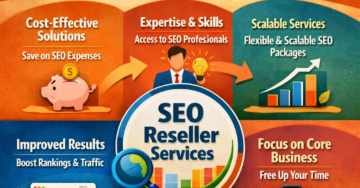
Did you know that companies that outsource their SEO gigs save nearly 30% of costs as compared to handling an in-house team? SEO is a powerful tool but not every business has the expertise of handling it in-house. That’s why hiring an expert SEO reseller in India is worthwhile. It can give you a return […]
.....
In today’s highly competitive digital landscape, businesses understand the importance of Search Engine Optimization (SEO) in driving online visibility, generating leads, and increasing revenue. However, building and maintaining an in-house SEO team can be expensive and resource-intensive. This is why many companies are turning to outsource SEO companies that offer high-quality services at a more […]
.....
Hey! If you’re scrolling this in 2026 (maybe sipping chai in Delhi like me right now 😄), you’re probably wondering the same thing tons of business owners are: Should I build my own in-house SEO team or just outsource SEO to a solid company—especially one in India? SEO keeps evolving with AI updates, voice search, […]
.....
Google Maps has come a long way from being the basic navigation app it once was: Today, Google Maps contributes to travelers, commuters, and so much more who need invaluable local information. One of its nifty, if underrated skills is the ability to drop a pin anywhere. You can therefore creat custom maps, save destinations […]
.....
Did you know that the HVAC industry is expected to reach $241.75 billion by 2031? With the increasing dependency on HVAC units, the industry is growing massively. And, with numerous HVAC contractors in the market, reaching your target audience is the main challenge. Picture this: someone in your region searches for HVAC installation services online […]
.....
Google has announced that it will discontinue the chat function in Google Business Profiles from July 15, 2024; with the full feature shutting down on July 31. This news has come as a surprise to businesses as GBP allows them to enhance their online presence across Google services. It means Google will not allow new […]
.....
Do you find yourself in a dilemma of whether to outsource your SEO or not? If you are also confused about taking this plunge, we are here to help you understand several aspects of SEO outsourcing. A lot of businesses believe that keeping SEO in-house would benefit them significantly but this isn’t true. In this […]
.....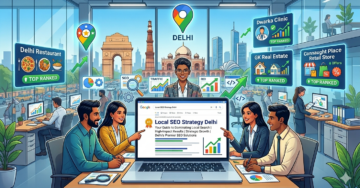
Delhi is one of the most competitive markets in India in terms of doing business. No matter what type of service you offer in your company, whether it’s restaurants, law firms, medical clinics, real estate agencies, educational institutes, or retail stores, people are now turning to the internet for help locating these services. Your company […]
.....
Search engine optimization has evolved far beyond rankings and traffic numbers. In 2026, businesses are investing heavily in SEO because organic visibility directly impacts revenue, lead generation, brand authority, and long-term digital growth. However, one question still dominates boardrooms, marketing meetings, and client discussions: How do you actually measure SEO ROI? SEO ROI, or return […]
.....
SEO Companies in the USA Search engine optimization has become one of the most critical digital marketing channels for businesses aiming to grow online visibility and revenue. In the USA, SEO companies play a major role in helping brands improve rankings, attract qualified traffic, and convert visitors into customers. With search algorithms becoming more advanced […]
.....
Online presence is one key factor that can determine a business’s success in the modern age. Whether you are selling something or just promoting your brand name, having an effective SEO strategy would help you rank well. With customers checking for information online, SEO is a crucial strategy that should be taken seriously by all […]
.....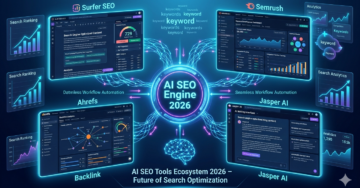
Introduction – The Rise of AI SEO in 2026 SEO in 2026 has changed tremendously from human-based optimization to a completely different landscape of using artificial intelligence to make decisions regarding SEO strategy. Companies are no longer merely competing for top positions in search engines based solely on creating compelling content or acquiring backlinks; they […]
.....
SEO is among the best business growth strategies in today’s market environment. Regardless of whether you own a start-up, e-commerce firm, SaaS provider, healthcare organization, or a local services firm, SEO can benefit your business in numerous ways, such as boosting visibility, bringing targeted traffic to your website, and driving quality leads. Companies that enjoy […]
.....
There has been an enormous increase in the demand for SEO services in recent times because companies have realized that search engine rankings play a crucial role in their ability to generate more sales and lead conversions. The growing pressure on digital marketing agencies to offer effective SEO services stems from this realization by various […]
.....
Today, SEO is considered the most essential investment in terms of digital marketing by all organizations. Whether it’s a local business, an e-commerce website, a software business, or even an enterprise-level business, having an online presence is necessary to get more visitors. In today’s world, however, SEO does not consist only of stuffing keywords into […]
.....
The modern-day organizations recognize the significance of SEO in creating online presence, gaining leads, and ensuring growth. Irrespective of whether it is an emerging organization, e-commerce, software-as-a-service firm, or a local business, the significance of ranking high on search engines has become crucial for reaching out to customers online. But, handling SEO activities within the […]
.....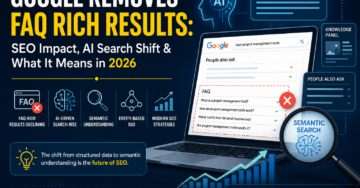
Google’s handling of FAQ rich results has become one of the most misunderstood developments in modern SEO. Many people describe it as a complete removal, but the reality is more nuanced. FAQ structured data still exists under Schema.org and continues to be supported by Google Search Central, yet its visibility in search results has been […]
.....
SEO has evolved into one of the most complex digital growth systems in modern marketing. It is no longer limited to ranking websites on Google through keywords and backlinks. SEO by 2026 includes traditional search engines, AI-generated answer systems, and semantic knowledge networks that understand user intent, not just search queries. This transformation has changed […]
.....
Search engine optimization has changed dramatically over the past few years. Google is using AI to power search results, user intent is more important than exact-match keywords, and competition is growing in almost every niche.Google is using AI to power search results, user intent is more important than exact-match keywords, and competition is growing in […]
.....
Search engine optimization has advanced far past conventional key-word stuffing and one-way link technology. In 2026, SEO is deeply intertwined with artificial intelligence, person reason modeling, semantic search, and predictive analytics. Businesses throughout the globe are more and more turning to India as a hub for subsequent-technology search engine marketing outsourcing services. The usa has placed itself as […]
.....
SEO is considered to be the most critical element for digital success. SEO is no longer limited to keyword placement and creating backlinks. Contemporary SEO entails technical optimization, content strategy, competition research, and monitoring. Due to these intricate processes, most companies choose to outsource their SEO tasks rather than handle them within their organizations. The […]
.....
AI Search Engine Ranking Tracking Tools 2026 : The New Way to Measure Visibility Search is no longer what it used to be. Today, people don’t just “Google” things—they ask questions to AI tools and expect direct answers. Platforms like ChatGPT, Google AI Mode, Perplexity, and Gemini are changing how content is discovered, ranked, and […]
.....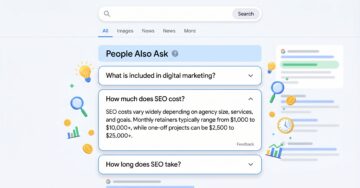
When people use Google to search for anything nowadays, they frequently come across an option known as the People Also Ask box. This is where Google provides you with several questions related to your search topic. It is not there by accident because it is part of how people research online and provides significant benefits […]
.....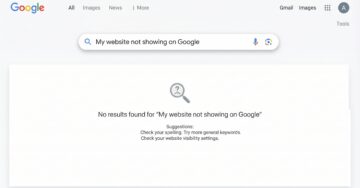
Your website is built meticulously. You have put in all your service offerings and contact information, and perhaps shared the website URL too. However, if your website not showing up on Google search, it can be frustrating when your company doesn’t appear anywhere. This is a scenario that is very common today in 2026. Thankfully, […]
.....
There is no chance your web pages will appear in search results without being indexed by Google. This implies that you might lose out even though the content you have created is very useful and relevant. Knowing how to submit your URL to Google Search can help you rank better. This procedure is often performed […]
.....
Did you know that over 90% of online experiences start with search engines? If this fact surprised you, then let us also tell you that only Google accounts for over 68% of all online searches. Websites that appear on the first page of Google search results get over 91.5% of traffic. These statistics tell the […]
.....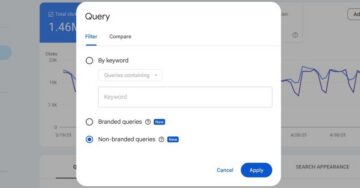
Google has rolled out its branded queries filter in Search Console to all eligible sites, simplifying how SEOs analyze branded versus non-branded traffic. This native tool replaces manual regex hacks, making performance reporting more efficient for eCommerce and health sites. Key Takeaways Universal Access: As of March 10, 2026, the AI-powered filter is now live […]
.....


