


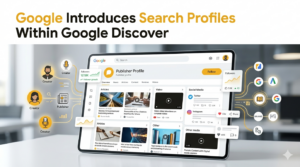
Google introduces Search Profiles to help publishers build stronger visibility and audience engagement.
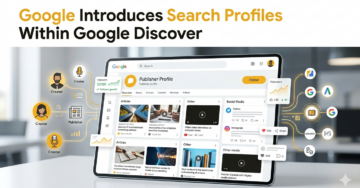
Google has officially begun rolling out Search Profiles within Google Discover in the United States, introducing a new way for publishers, creators, and brands to establish a stronger presence across Google’s ecosystem. The feature creates dedicated publisher landing pages that allow users to follow content sources, explore recent articles, watch videos, and access social media content from a single destination.
As Google Search continues evolving amid the rise of AI-generated answers and changing user behavior, Search Profiles represent another step toward helping publishers maintain visibility, authority, and audience engagement.
For publishers and digital marketers, this update could become an important part of content distribution and brand-building strategies moving forward.
Search Profiles are dedicated, shareable pages created by Google for eligible publishers and creators. These profiles serve as a centralized hub where users can discover content from a specific source across multiple channels.
According to Google, Search Profiles are designed to:
The goal is to create a more complete representation of publishers and creators within Google’s ecosystem while making it easier for users to stay connected with trusted sources.
Rather than relying solely on individual articles appearing in Search or Discover feeds, publishers now have an opportunity to build a branded destination that aggregates their content and online presence.
When users discover a publisher through Google Search or Google Discover, they may now see an option to access that publisher’s Search Profile.
The profile includes several important elements:
Instead of forcing users to jump between websites, social networks, and video platforms, Search Profiles bring multiple content formats together in one location.
This creates a stronger user experience while giving publishers another way to build audience loyalty.
The timing of this launch is particularly significant.
Over the past year, Google has faced increasing pressure from:
Publishers have repeatedly expressed concerns about reduced visibility as AI-generated answers become more prominent in search results.
Search Profiles appear to be Google’s response to some of these concerns by offering publishers:
Instead of users consuming only a single article and leaving, Google is encouraging deeper relationships between audiences and content creators.
Currently, Search Profiles are only available to publishers and creators that meet Google’s eligibility requirements.
Google stated that access is initially limited to creators and publishers with a substantial following on at least one major platform.
The current follower thresholds include:
| Platform | Minimum Followers |
|---|---|
| TikTok | 300,000 |
| YouTube | 100,000 |
| 100,000 | |
| X (Twitter) | 100,000 |
These requirements indicate that Google is initially targeting established publishers and creators with proven audience engagement.
However, Google has also indicated that access will expand over time.
Smaller publishers may gain eligibility in future phases as the program matures.
Eligible publishers can claim and customize their Search Profile through Google’s management tools.
Once claimed, publishers can update:
This level of customization allows publishers to present a consistent brand identity across Google’s ecosystem.
For organizations that already have a Google Knowledge Panel, Search Profiles can enhance that presence by adding:
In some cases, claiming a Search Profile may even trigger the creation of a new Knowledge Panel for eligible entities.
Google Discover has become one of the most important traffic sources for many publishers.
Unlike traditional search, Discover recommends content based on user interests, browsing behavior, and engagement patterns.
Search Profiles strengthen this relationship by adding a direct follow mechanism.
This means users who appreciate a publisher’s content can actively subscribe to updates through Google’s ecosystem.
Potential benefits include:
For publishers heavily invested in Google Discover traffic, Search Profiles could become a valuable audience-building tool.
From an SEO perspective, Search Profiles represent more than just a new feature. They reflect a broader shift in how Google evaluates and presents content sources. Several trends are becoming increasingly clear:
Google continues emphasizing trusted brands and recognized publishers. Search Profiles further reinforce the importance of building a recognizable online presence through SEO strategies.
The integration of social media and video content suggests Google is evaluating publishers across multiple channels.
Brands that actively invest in:
may gain additional visibility advantages.
Search Profiles align closely with Google’s entity-based search systems. Google increasingly focuses on understanding:
Rather than simply ranking individual webpages.
Publishers with loyal audiences and strong engagement signals may be better positioned to succeed in future search environments.
While Search Profiles provide new opportunities, they also raise an important question. Can features like this offset the impact of AI-generated search experiences?
The rise of AI search assistants and generative search results has created significant uncertainty for publishers.
Many websites have experienced:
Search Profiles offer some potential benefits by helping publishers:
However, they do not directly address the broader challenge of declining organic clicks caused by AI-generated summaries.
The long-term effectiveness of Search Profiles will largely depend on whether they can drive meaningful audience growth and repeat engagement for publishers.
Publishers should begin preparing for a future where brand visibility extends beyond traditional search rankings.
Recommended actions include:
Invest in:
to maximize visibility across Google’s ecosystem.
Track Discover traffic and engagement trends using Google Analytics services to identify opportunities created by Search Profiles.
Maintain accurate information across:
to reinforce Google’s understanding of your brand.
Google’s introduction of Search Profiles within Google Discover represents another major step in the evolution of content discovery. By providing dedicated publisher landing pages that combine articles, videos, social content, and follower functionality, Google is creating new opportunities for publishers to build stronger audience relationships.
While Search Profiles may not completely solve the challenges posed by AI-driven search experiences, they clearly signal Google’s continued emphasis on trusted brands, entity recognition, and audience engagement.
For publishers, content creators, and digital marketers, the message is becoming increasingly clear: future success will depend not only on ranking content but also on building a recognizable, authoritative brand that users actively choose to follow.
As Google continues expanding Search Profiles, publishers who establish strong multi-platform visibility today will likely be in the best position to benefit from tomorrow’s search ecosystem through strategies such as AI SEO services, Answer Engine Optimization, and voice search optimization.
Google Search Profiles are dedicated landing pages for publishers and creators that showcase their latest articles, videos, social media posts, and brand information in one place. Users can also follow publishers directly through these profiles.
Google Search Profiles appear within Google Search and Google Discover. Users can access them by clicking on a publisher's profile when available.
Currently, Google is rolling out Search Profiles to publishers and creators with a significant following on at least one major content platform such as YouTube, Instagram, TikTok, or X (formerly Twitter).
Eligible publishers can claim and customize their Search Profile through Google's profile management tools. They can add branding, social accounts, website information, and other relevant details.
Yes. Google has stated that claiming a Search Profile may trigger the creation of a Knowledge Panel for eligible publishers and creators who do not already have one.

Gaurav is working on various verticals like IT & Software Solutions | Digital Marketing | E-Commerce | BPO | Outsourcing | Offshoring | Global Deliveries | Exports | Education. Gaurav believes in CHANGE, which is constant throughout the LIFE so be with the CHANGE Gaurav is having, In-depth experience in IT Solutions, Offshoring, Internet Branding, Sales & Marketing, Managing New Projects & Processes, Solution Designing and Transitioning of New International and Domestic business engagements. Proficient at managing & leading teams to run successful operations & experienced in developing procedures, service standards, client satisfaction using standard frameworks for business excellence.


The algorithms employed by Google keep getting improved from time to time in order to enhance how they analyze and rank content. Structured data is among the features of search engines that have emerged as important in SEO since it enables the algorithms to gain a better understanding of what is published on sites. Google […]
.....
Google has started rolling out one of its most important updates in recent years for website owners and SEO professionals. The update brings AI-powered performance reporting and early-stage content control options inside Google Search Console, focused on how websites appear in generative AI experiences such as AI Overviews, AI Mode, and AI-generated results in Discover. […]
.....
The way the world searches on Google just changed — and not just a little. At Google I/O 2026, the company unveiled what it’s calling the biggest upgrade to the Google Search box in over 25 years, marking a major shift in how users interact with the world’s most popular search engine. For two and […]
.....
The pharmaceutical industry has become increasingly digital, with healthcare professionals, patients, and researchers relying on search engines to discover medications, treatment options, clinical research, and healthcare providers. As competition intensifies, pharmaceutical companies need specialized SEO strategies that not only improve search visibility but also comply with strict healthcare regulations. Unlike general SEO agencies, top pharmaceutical […]
.....
Artificial intelligence is transforming how people discover information online. Instead of relying solely on traditional search engines, users increasingly ask questions in platforms such as ChatGPT, Google AI Overviews, Microsoft Copilot, Gemini, Claude, and Perplexity. This shift has introduced new optimization strategies that extend beyond conventional SEO. Among the newest discussions in technical SEO are […]
.....
Why Business Directories Still Matter for Local SEO and Customer Discovery In an era dominated by search engines and social media, many businesses overlook the importance of business directories. However, online directories remain one of the most effective ways to improve local SEO, strengthen online visibility, and help potential customers find products and services. A […]
.....
Local businesses depend on visibility in search results to attract nearby customers. However, even the best-optimized web pages cannot generate traffic if search engines fail to discover and index them quickly. This is where Rapid URL Indexer becomes valuable. It helps website owners, marketers, and SEO professionals accelerate the indexing process, ensuring important pages appear […]
.....
Google Search is growing faster than ever, and one of the biggest changes has been in AI-generated search experiences. Google, instead of showing traditional search results, is just directly giving us AI-generated responses to our queries. AI Overviews: These pointers are changing the way people find things, and how websites enjoy visibility. This represents a […]
.....
Imagine investing months into building a website, publishing content, optimizing pages, and running marketing campaigns—without knowing whether anyone is actually visiting your site. In today’s highly competitive digital landscape, making decisions without traffic data is like navigating unfamiliar roads without a map. Website traffic analysis has become one of the most important aspects of digital […]
.....
Google Expands Publisher Visibility with Search Profiles Google has officially begun rolling out Search Profiles within Google Discover in the United States, introducing a new way for publishers, creators, and brands to establish a stronger presence across Google’s ecosystem. The feature creates dedicated publisher landing pages that allow users to follow content sources, explore recent […]
.....
Why SEO Keyword Research Is the Foundation of Search Success In the modern search landscape, success is no longer about simply inserting keywords into content. It is about understanding what users are searching for, why they are searching for it, and how you can deliver the most relevant and valuable answer at the right moment. […]
.....
: Marketing companies are always under pressure to come up with more effective strategies for their clients, all the while juggling various projects simultaneously. As the expectations of their clients keep rising, most firms find it increasingly challenging to take care of all SEO-related aspects themselves. Increased staffing and costly tools may result in higher […]
.....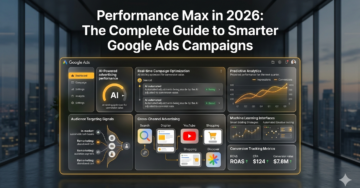
The modern digital advertising ecosystem has evolved significantly, and businesses now rely heavily on data-driven advertising systems like Google Ads to achieve scalable growth. This guide provides a structured, informational breakdown of how to build smarter, performance-oriented campaigns designed to improve ROI, optimize targeting, and maximize conversions across competitive industries. The focus is on practical […]
.....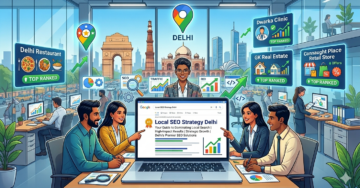
Delhi is one of the most competitive markets in India in terms of doing business. No matter what type of service you offer in your company, whether it’s restaurants, law firms, medical clinics, real estate agencies, educational institutes, or retail stores, people are now turning to the internet for help locating these services. Your company […]
.....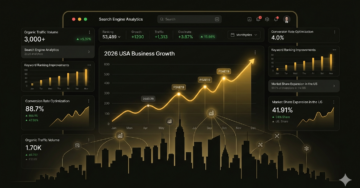
SEO Companies in the USA Search engine optimization has become one of the most critical digital marketing channels for businesses aiming to grow online visibility and revenue. In the USA, SEO companies play a major role in helping brands improve rankings, attract qualified traffic, and convert visitors into customers. With search algorithms becoming more advanced […]
.....
Online presence is one key factor that can determine a business’s success in the modern age. Whether you are selling something or just promoting your brand name, having an effective SEO strategy would help you rank well. With customers checking for information online, SEO is a crucial strategy that should be taken seriously by all […]
.....
Today, SEO is considered the most essential investment in terms of digital marketing by all organizations. Whether it’s a local business, an e-commerce website, a software business, or even an enterprise-level business, having an online presence is necessary to get more visitors. In today’s world, however, SEO does not consist only of stuffing keywords into […]
.....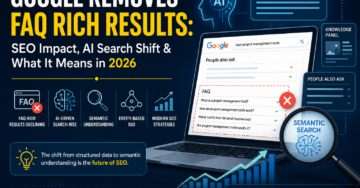
Google’s handling of FAQ rich results has become one of the most misunderstood developments in modern SEO. Many people describe it as a complete removal, but the reality is more nuanced. FAQ structured data still exists under Schema.org and continues to be supported by Google Search Central, yet its visibility in search results has been […]
.....
SEO has evolved into one of the most complex digital growth systems in modern marketing. It is no longer limited to ranking websites on Google through keywords and backlinks. SEO by 2026 includes traditional search engines, AI-generated answer systems, and semantic knowledge networks that understand user intent, not just search queries. This transformation has changed […]
.....
Search engine optimization has changed dramatically over the past few years. Google is using AI to power search results, user intent is more important than exact-match keywords, and competition is growing in almost every niche.Google is using AI to power search results, user intent is more important than exact-match keywords, and competition is growing in […]
.....
SEO is considered to be the most critical element for digital success. SEO is no longer limited to keyword placement and creating backlinks. Contemporary SEO entails technical optimization, content strategy, competition research, and monitoring. Due to these intricate processes, most companies choose to outsource their SEO tasks rather than handle them within their organizations. The […]
.....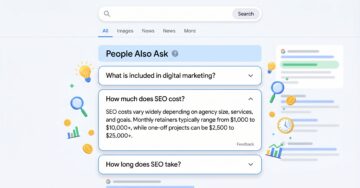
When people use Google to search for anything nowadays, they frequently come across an option known as the People Also Ask box. This is where Google provides you with several questions related to your search topic. It is not there by accident because it is part of how people research online and provides significant benefits […]
.....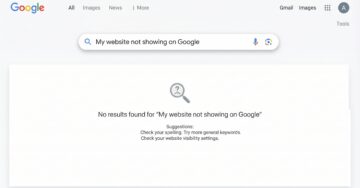
Your website is built meticulously. You have put in all your service offerings and contact information, and perhaps shared the website URL too. However, if your website not showing up on Google search, it can be frustrating when your company doesn’t appear anywhere. This is a scenario that is very common today in 2026. Thankfully, […]
.....


