


Artificial intelligence is transforming how people discover information online. Instead of relying solely on traditional search engines, users increasingly ask questions in platforms such as ChatGPT, Google AI Overviews, Microsoft Copilot, Gemini, Claude, and Perplexity. This shift has introduced new optimization strategies that extend beyond conventional SEO.
Among the newest discussions in technical SEO are AI.txt and LLMs.txt. Although they sound similar, they serve different purposes and are often misunderstood. Some website owners assume these files directly influence AI rankings, while others mistakenly believe they replace robots.txt.
This guide explains the differences between AI.txt and LLMs.txt, how AI systems interpret them, their current adoption, and whether your website should implement either file. You’ll also learn practical recommendations for improving visibility across AI-powered search experiences while following modern Search Everywhere Optimization (SEvO), Generative Engine Optimization (GEO), and Answer Engine Optimization (AEO) best practices.
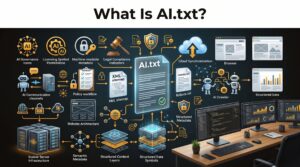
AI.txt provides emerging AI communication and policy guidance.
AI.txt is a proposed website file intended to provide structured instructions or information for AI systems. Unlike robots.txt, it is not an official web standard and currently has limited adoption among major AI platforms.
AI.txt has gained attention because website owners want a standardized way to communicate with artificial intelligence systems. Similar to how robots.txt gives crawling instructions to search engines, AI.txt has been suggested as a file that could provide AI-specific guidance. For a deeper look at how crawler directives work today, see our Robots.txt Best Practices guide.
Depending on the proposal, AI.txt may contain information about licensing, content usage preferences, AI-friendly summaries, attribution requirements, or machine-readable metadata. However, unlike robots.txt, there is currently no universally accepted specification supported across the AI industry.
This lack of standardization means one AI platform may ignore AI.txt entirely while another experimental crawler could attempt to interpret it differently.
For SEO professionals, AI.txt should currently be viewed as an emerging technology rather than a ranking factor. Implementing one may prepare your website for future developments, but it should never replace proven optimization methods such as structured data, high-quality content, crawlable architecture, and EEAT principles as outlined in Google Search Central Documentation.
Expert Tip: Treat AI.txt as an experimental enhancement instead of an essential SEO requirement until a recognized industry standard emerges.

LLMs.txt helps AI models discover important website resources.
LLMs.txt is a proposed markdown-based file that helps large language models understand the most important pages, documentation, and resources on a website. It is designed to improve AI comprehension rather than control crawling.
LLMs.txt was introduced as a lightweight way for website owners to present structured information to large language models. Instead of forcing AI systems to analyze thousands of pages, the file can provide a curated roadmap to the site’s most valuable resources.
A typical LLMs.txt file may include:
Unlike robots.txt, which primarily controls crawler access, LLMs.txt focuses on improving content discovery and contextual understanding.
For example, a SaaS company could include links to installation guides, API documentation, pricing information, and frequently asked questions. An AI assistant reading this file may more quickly identify authoritative content when generating answers.
Although interest in LLMs.txt is growing within developer communities, adoption remains voluntary and support varies across AI platforms. Website owners should monitor developments while continuing to prioritize structured content, internal linking, and schema markup.
Best Practice: Keep your LLMs.txt concise, regularly updated, and focused on evergreen resources that accurately represent your website.
AI.txt aims to communicate AI-related policies or preferences, whereas LLMs.txt acts as a navigation guide for large language models by highlighting your site’s most valuable content. They solve different problems and are not interchangeable.
Although both files target artificial intelligence systems, their intended purposes differ significantly.
AI.txt is generally envisioned as a policy-oriented file. It may eventually help publishers specify how AI systems should use, attribute, or interpret their content. Because there is no universally accepted specification, implementations vary and many AI crawlers currently ignore it.
LLMs.txt, on the other hand, is content-centric. Rather than expressing permissions or restrictions, it introduces large language models to the most authoritative resources on a website. Think of it as an executive summary that reduces the effort required for AI systems to locate trustworthy information.
For technical SEO teams, understanding this distinction is important. Implementing LLMs.txt can complement existing documentation strategies, while AI.txt remains largely experimental. Neither file replaces fundamental SEO practices such as crawl optimization, structured data, semantic internal linking, and publishing authoritative, well-organized content. See our Technical SEO Checklist for a full breakdown.
As AI search evolves, these files may become more influential, but today they should be considered supplementary tools rather than primary ranking signals.
Most AI crawlers currently rely on standard web protocols such as robots.txt, structured data, XML sitemaps, and publicly accessible content. AI.txt and LLMs.txt are supplementary files that may improve communication with AI systems but are not universally supported.
AI-powered search platforms retrieve information differently than traditional search engines, but they still depend on accessible, well-structured websites. Major AI systems may use their own crawlers, licensed datasets, search engine indexes, or retrieval pipelines to answer user questions. Google, for instance, documents how its own generative features work in its Google AI Overview Documentation.
Currently, no major AI platform requires AI.txt or LLMs.txt for indexing. Instead, websites should focus on:
LLMs.txt can act as a directory that points AI models toward your most valuable documentation, product pages, or knowledge base. AI.txt may eventually serve as a standardized communication channel if industry adoption grows.
Example: A software company could include links to API documentation, setup guides, pricing, and support articles in its LLMs.txt file. This helps AI systems locate authoritative information faster without replacing existing SEO best practices.
If your website has extensive documentation or evergreen resources, implementing an LLMs.txt file can be worthwhile. AI.txt may be worth monitoring as the ecosystem evolves, but it should not be treated as a current SEO requirement.
For most businesses, the decision depends on the type of website they operate.
Documentation-heavy websites—such as SaaS platforms, developer portals, educational websites, and enterprise knowledge bases—can benefit most from LLMs.txt because it highlights important resources for AI systems.
Smaller business websites with only a handful of pages may see little immediate value beyond future-proofing.
Before implementing either file, ensure your website already has:
Adding AI.txt or LLMs.txt to a technically weak website will not compensate for poor content or crawlability.
Expert Recommendation: Treat LLMs.txt as an enhancement layer—not a replacement for technical SEO, semantic content, or structured data.

Technical SEO and structured content remain the foundation of AI visibility.
Optimizing for AI search requires publishing authoritative, structured, and easily understandable content while making it accessible through technical SEO, schema markup, and logical site architecture.
Whether AI systems use AI.txt, LLMs.txt, or neither, the principles of AI search optimization remain consistent.
Follow these best practices:
Modern AI assistants favor content that is factual, well-organized, and trustworthy. They also perform better when websites clearly identify entities such as organizations, products, authors, and technologies.
The goal is not to optimize for one specific AI platform but to create content that is easy for any retrieval system to understand and cite.
The biggest mistake is assuming AI.txt or LLMs.txt alone will improve AI visibility. Success depends on content quality, technical SEO, structured data, and overall website authority—not on a single file.
As interest in AI SEO grows, misconceptions are becoming common.
Avoid these mistakes:
Instead, focus on building a technically sound, content-rich website that answers users’ questions clearly. AI files should complement—not replace—your broader SEO strategy.
| Feature | AI.txt | LLMs.txt | robots.txt |
|---|---|---|---|
| Primary Purpose | AI policies and preferences | Guide LLMs to key resources | Control crawler access |
| Official Standard | No | No | Yes |
| Primary Audience | AI systems | Large Language Models | Search engine crawlers |
| Controls Crawling | No | No | Yes |
| Improves Content Discovery | Limited | Yes | Indirectly |
| Widely Supported | Limited | Emerging | Yes |
| Replaces robots.txt | No | No | N/A |
AI-powered search is reshaping how users discover information, but the fundamentals of high-quality SEO remain unchanged. While AI.txt and LLMs.txt introduce new ways to communicate with artificial intelligence systems, they are not magic ranking factors.
Today, LLMs.txt offers a practical way to organize important resources for large language models, particularly for websites with extensive documentation. AI.txt, meanwhile, is still an evolving proposal that deserves attention but not overreliance.
The most effective strategy is to build a technically optimized website with authoritative content, structured data, logical internal linking, and strong EEAT signals. By combining these proven practices with emerging AI optimization techniques—and staying current with resources like Google Search Central Documentation, Wikipedia’s overview of large language models, and NIST’s AI resources—your website will be better positioned to appear in traditional search results as well as AI-generated answers across ChatGPT, Google AI Overviews, Gemini, Claude, Perplexity, and other answer engines.
Ready to build a stronger AI and search visibility strategy? Explore our AI SEO Services or contact our team to get started.
AI.txt is a proposed file designed to communicate AI-related preferences or metadata to artificial intelligence systems. It is not currently an official web standard, and support varies among AI platforms.
LLMs.txt is a Markdown-based file that highlights a website's most important resources for large language models. It helps AI systems discover authoritative content more efficiently.
No. Robots.txt controls crawler access, while AI.txt is intended to provide AI-specific guidance. They serve different purposes.
Not necessarily. Websites with extensive documentation, knowledge bases, or educational resources are most likely to benefit from LLMs.txt.
Currently, there is no universal requirement from major AI platforms to implement AI.txt. Traditional SEO best practices remain the primary ranking signals.
There is no evidence that AI.txt directly affects Google Search rankings. High-quality content, technical SEO, and structured data remain the most important factors.
It can be useful if the website contains detailed buying guides, FAQs, product documentation, or help center content that AI systems may reference.
AI.txt focuses on communicating AI-related policies or preferences, whereas LLMs.txt acts as a guide that points large language models toward the site's most valuable content.

Gaurav Madan, Founder and CEO of Autus Digital Agency, is a pioneering figure in digital marketing with experience of 20+ years. His expertise revolutionizes online marketing strategies and leverages digital platforms for business growth. Gaurav’s consumer-centric approach and strategic vision propel diverse industries to position online presence and dominate.


The pharmaceutical industry has become increasingly digital, with healthcare professionals, patients, and researchers relying on search engines to discover medications, treatment options, clinical research, and healthcare providers. As competition intensifies, pharmaceutical companies need specialized SEO strategies that not only improve search visibility but also comply with strict healthcare regulations. Unlike general SEO agencies, top pharmaceutical […]
.....
Why Business Directories Still Matter for Local SEO and Customer Discovery In an era dominated by search engines and social media, many businesses overlook the importance of business directories. However, online directories remain one of the most effective ways to improve local SEO, strengthen online visibility, and help potential customers find products and services. A […]
.....
Local businesses depend on visibility in search results to attract nearby customers. However, even the best-optimized web pages cannot generate traffic if search engines fail to discover and index them quickly. This is where Rapid URL Indexer becomes valuable. It helps website owners, marketers, and SEO professionals accelerate the indexing process, ensuring important pages appear […]
.....
Google Search is growing faster than ever, and one of the biggest changes has been in AI-generated search experiences. Google, instead of showing traditional search results, is just directly giving us AI-generated responses to our queries. AI Overviews: These pointers are changing the way people find things, and how websites enjoy visibility. This represents a […]
.....
Imagine investing months into building a website, publishing content, optimizing pages, and running marketing campaigns—without knowing whether anyone is actually visiting your site. In today’s highly competitive digital landscape, making decisions without traffic data is like navigating unfamiliar roads without a map. Website traffic analysis has become one of the most important aspects of digital […]
.....
Google Expands Publisher Visibility with Search Profiles Google has officially begun rolling out Search Profiles within Google Discover in the United States, introducing a new way for publishers, creators, and brands to establish a stronger presence across Google’s ecosystem. The feature creates dedicated publisher landing pages that allow users to follow content sources, explore recent […]
.....
Why SEO Keyword Research Is the Foundation of Search Success In the modern search landscape, success is no longer about simply inserting keywords into content. It is about understanding what users are searching for, why they are searching for it, and how you can deliver the most relevant and valuable answer at the right moment. […]
.....
: Marketing companies are always under pressure to come up with more effective strategies for their clients, all the while juggling various projects simultaneously. As the expectations of their clients keep rising, most firms find it increasingly challenging to take care of all SEO-related aspects themselves. Increased staffing and costly tools may result in higher […]
.....
The modern digital advertising ecosystem has evolved significantly, and businesses now rely heavily on data-driven advertising systems like Google Ads to achieve scalable growth. This guide provides a structured, informational breakdown of how to build smarter, performance-oriented campaigns designed to improve ROI, optimize targeting, and maximize conversions across competitive industries. The focus is on practical […]
.....
Delhi is one of the most competitive markets in India in terms of doing business. No matter what type of service you offer in your company, whether it’s restaurants, law firms, medical clinics, real estate agencies, educational institutes, or retail stores, people are now turning to the internet for help locating these services. Your company […]
.....
SEO Companies in the USA Search engine optimization has become one of the most critical digital marketing channels for businesses aiming to grow online visibility and revenue. In the USA, SEO companies play a major role in helping brands improve rankings, attract qualified traffic, and convert visitors into customers. With search algorithms becoming more advanced […]
.....
Online presence is one key factor that can determine a business’s success in the modern age. Whether you are selling something or just promoting your brand name, having an effective SEO strategy would help you rank well. With customers checking for information online, SEO is a crucial strategy that should be taken seriously by all […]
.....
Today, SEO is considered the most essential investment in terms of digital marketing by all organizations. Whether it’s a local business, an e-commerce website, a software business, or even an enterprise-level business, having an online presence is necessary to get more visitors. In today’s world, however, SEO does not consist only of stuffing keywords into […]
.....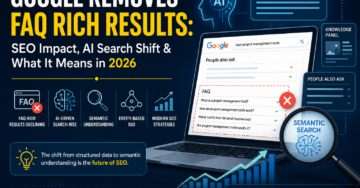
Google’s handling of FAQ rich results has become one of the most misunderstood developments in modern SEO. Many people describe it as a complete removal, but the reality is more nuanced. FAQ structured data still exists under Schema.org and continues to be supported by Google Search Central, yet its visibility in search results has been […]
.....
SEO has evolved into one of the most complex digital growth systems in modern marketing. It is no longer limited to ranking websites on Google through keywords and backlinks. SEO by 2026 includes traditional search engines, AI-generated answer systems, and semantic knowledge networks that understand user intent, not just search queries. This transformation has changed […]
.....
Search engine optimization has changed dramatically over the past few years. Google is using AI to power search results, user intent is more important than exact-match keywords, and competition is growing in almost every niche.Google is using AI to power search results, user intent is more important than exact-match keywords, and competition is growing in […]
.....
SEO is considered to be the most critical element for digital success. SEO is no longer limited to keyword placement and creating backlinks. Contemporary SEO entails technical optimization, content strategy, competition research, and monitoring. Due to these intricate processes, most companies choose to outsource their SEO tasks rather than handle them within their organizations. The […]
.....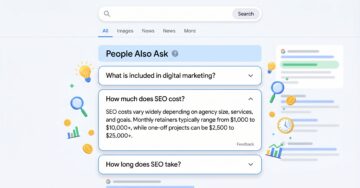
When people use Google to search for anything nowadays, they frequently come across an option known as the People Also Ask box. This is where Google provides you with several questions related to your search topic. It is not there by accident because it is part of how people research online and provides significant benefits […]
.....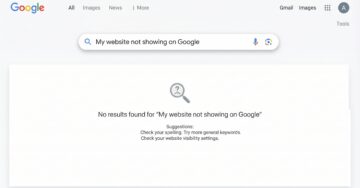
Your website is built meticulously. You have put in all your service offerings and contact information, and perhaps shared the website URL too. However, if your website not showing up on Google search, it can be frustrating when your company doesn’t appear anywhere. This is a scenario that is very common today in 2026. Thankfully, […]
.....
There is no chance your web pages will appear in search results without being indexed by Google. This implies that you might lose out even though the content you have created is very useful and relevant. Knowing how to submit your URL to Google Search can help you rank better. This procedure is often performed […]
.....


