


The way people discover information is changing fast. More users are now asking AI tools questions instead of typing every search into Google, and that shift is changing how brands need to think about visibility. If you want your content to appear in AI answers, you need more than traditional SEO. You need content that is clear, trustworthy, original, and easy for large language models, or LLMs, to reference.
This is where AI SEO services and an AI SEO agency become especially important. Traditional SEO still matters, but AI search introduces a new layer. Now, it is not only about ranking on page one. It is also about being cited inside AI-generated answers, summaries, and recommendations. That citation can build authority, increase brand awareness, and influence a buyer before they ever visit your website.
LLM citations matter because they affect how people see your brand in a world where AI is becoming a front door to information. When an AI tool uses your content as a source, it signals trust. It tells users that your content is relevant enough to help answer a question. In many cases, that can shape the user’s perception of your expertise even if they never click through to your site.
Recent visibility research has shown that some platforms and content types are cited far more often than others. Semrush’s LinkedIn AI visibility study found that LinkedIn was heavily represented in AI answers and that original posts performed especially well. That is a strong sign that AI systems look for clear, fresh, and authoritative content they can confidently reuse.
For brands, this changes the goal of content marketing. A blog post is no longer just a traffic asset. It is also a knowledge asset. The better your content explains a topic, the more likely it is to be surfaced when AI systems are looking for a trustworthy source.
Not every article has the same chance of being cited by an LLM. AI systems tend to prefer content that is specific, structured, and easy to understand. If your article is vague, repetitive, or written only to fill space, it is much less likely to stand out.
Cite-worthy content usually has a few things in common. It gives a direct answer to a real question. It uses a clear heading structure. It includes facts, examples, or original insight. It avoids fluff and gets to the point quickly. This kind of content is easier for both humans and machines to process.
Originality also matters. AI models are more likely to reference content that adds something new instead of repeating what every other article says. That could be a unique framework, a practical example, industry observations, or original research. If your content sounds like everyone else’s content, it is harder to earn a citation.
This is one reason businesses are turning to AI SEO services. These services help shape content so it can perform well in both traditional search and AI-driven environments. The goal is to make the content useful enough that it becomes part of the answer set AI systems rely on.
If your goal is to get cited in LLMs, start by building topical authority. One strong article will not do everything. You need a body of content that shows depth on a subject. When your site consistently covers one topic well, AI systems are more likely to treat it as a reliable source.
Focus on one clear topic at a time. Do not try to cover too many ideas in a single article. A focused article has a better chance of being quoted because it answers one question cleanly. For example, instead of writing a broad article about digital marketing, write a post about how to improve brand visibility in AI search. That gives the AI a specific subject to understand and reference.
Use simple language. LLMs do not need fancy wording. In fact, plain and precise language is often better. Short paragraphs, clear definitions, and direct explanations make your content easier to interpret. If a reader can quickly understand your message, AI systems usually can too.
Another important step is to include credible support. Facts, data points, examples, and references make content more trustworthy. When content appears grounded in reality rather than opinion alone, it becomes stronger as a citation source. AI systems are more likely to use content that feels reliable and specific.
You should also update content regularly. AI tools tend to value recent, relevant information, especially in fast-moving fields like SEO, AI marketing, and digital strategy. A page that was useful two years ago may no longer be the best answer today if it has not been refreshed.
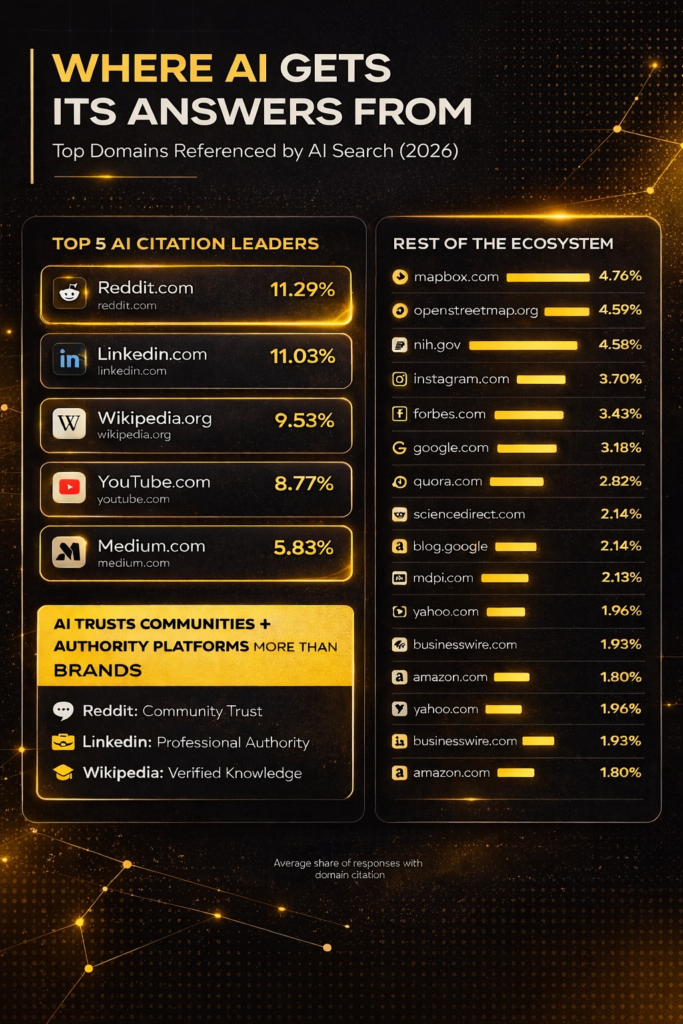
Image Source: https://www.semrush.com/blog/linkedin-ai-visibility-study/
Structure is one of the most overlooked parts of AI visibility. Humans like structure because it makes reading easier. LLMs like structure for the same reason. A well-organized article gives the model a cleaner path through the information.
Use clear headings. Break up long sections. Keep paragraphs short. Answer the main question early. If your content has a logical flow, it becomes easier for AI systems to identify the most useful parts.
Bulleted lists can also help when used correctly. They are useful for steps, features, tips, or takeaways. But the content should still read naturally. AI systems prefer content that is easy to parse without feeling robotic.
This is where a strong AI SEO agency can add value. Good agencies understand how to structure content for both ranking and citation. They look at content architecture, internal links, schema, entity relationships, and topic depth to make your pages more machine-friendly and more useful to people.
LinkedIn is becoming an important source for AI-generated answers. The reason is simple: it contains a lot of original thought leadership, practical insight, and professional expertise. Semrush’s study showed that LinkedIn was cited frequently in AI responses, and original content appeared to matter more than reshared material.
That is a useful lesson for brands and creators. If you want AI systems to notice your content, create something original. Do not just repost someone else’s idea. Add your own point of view. Share a real example. Explain what worked and what did not. AI systems are more likely to cite content that sounds informed and human.
LinkedIn is also useful because it can support both personal branding and company branding. A founder, marketer, or SEO specialist can publish insights under their own name, while the company builds visibility through the brand page and website. Together, those signals can strengthen authority.
This shift matters because AI search is becoming part of the decision-making process. Users may ask an AI tool for recommendations, explanations, comparisons, or how-to guidance before they ever reach a website. If your brand appears in that response, you gain exposure early in the journey.
That means AI citations are no longer a “nice to have.” They are becoming part of modern brand strategy. If you want to stay visible, your content needs to be designed with this new environment in mind. That includes using a consistent tone, publishing useful insights, and showing up in the places where AI models are likely to learn from.
For service businesses, this is especially important. If you run a consulting firm, agency, SaaS brand, or B2B company, being cited in an AI answer can influence trust. It positions you as a source of knowledge, not just a vendor trying to sell something.
There are a few practical ways to improve your chances of being cited in LLMs.
AI SEO is still evolving, but the direction is clear. Search is moving toward answers, summaries, and recommendations that are generated on the fly. That means brands need to optimize for visibility across more than just search engine result pages.
In this new landscape, content that is useful, specific, and well-organized has a better chance of being cited. That is why AI SEO services are growing in importance. They help businesses adapt content strategy to a world where citations can matter as much as clicks.
The best approach is not to chase every trend. It is to create strong content consistently. Publish pieces that answer real questions. Build a recognizable brand voice. Support your claims with facts. Keep improving your top pages. Over time, those actions can help your content become more visible to both search engines and LLMs.
Getting cited in LLMs is about becoming a trusted source, not just a searchable one. If your content is helpful, original, well-structured, and easy to verify, it has a better chance of being used in AI answers. That can improve brand visibility, strengthen trust, and support long-term growth.
For businesses that want to compete in AI-driven search, this is the moment to act. Whether you work with an AI SEO agency or manage content in-house, the goal is the same: create content that deserves to be cited. That is what will matter more and more as AI becomes a bigger part of how people discover information.

Gaurav Madan, Founder and CEO of Autus Digital Agency, is a pioneering figure in digital marketing with experience of 20+ years. His expertise revolutionizes online marketing strategies and leverages digital platforms for business growth. Gaurav’s consumer-centric approach and strategic vision propel diverse industries to position online presence and dominate.

In today’s visually driven digital landscape, where images convey information faster than text, Google image search emerges as an indispensable tool. This feature empowers users to query the internet using pictures rather than keywords, revolutionizing how we discover, verify, and leverage visual content. From academic researchers tracing historical artifacts to marketers sourcing high-quality visuals for […]
.....
Did you know that companies that outsource their SEO gigs save nearly 30% of costs as compared to handling an in-house team? SEO is a powerful tool but not every business has the expertise of handling it in-house. That’s why hiring an expert SEO reseller in India is worthwhile. It can give you a return […]
.....
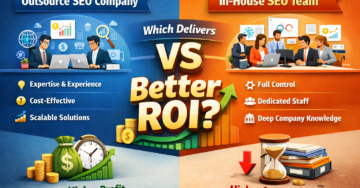
In today’s highly competitive digital landscape, businesses understand the importance of Search Engine Optimization (SEO) in driving online visibility, generating leads, and increasing revenue. However, building and maintaining an in-house SEO team can be expensive and resource-intensive. This is why many companies are turning to outsource SEO companies that offer high-quality services at a more […]
.....
Hey! If you’re scrolling this in 2026 (maybe sipping chai in Delhi like me right now 😄), you’re probably wondering the same thing tons of business owners are: Should I build my own in-house SEO team or just outsource SEO to a solid company—especially one in India? SEO keeps evolving with AI updates, voice search, […]
.....
Google Maps has come a long way from being the basic navigation app it once was: Today, Google Maps contributes to travelers, commuters, and so much more who need invaluable local information. One of its nifty, if underrated skills is the ability to drop a pin anywhere. You can therefore creat custom maps, save destinations […]
.....
Did you know that the HVAC industry is expected to reach $241.75 billion by 2031? With the increasing dependency on HVAC units, the industry is growing massively. And, with numerous HVAC contractors in the market, reaching your target audience is the main challenge. Picture this: someone in your region searches for HVAC installation services online […]
.....
Google has announced that it will discontinue the chat function in Google Business Profiles from July 15, 2024; with the full feature shutting down on July 31. This news has come as a surprise to businesses as GBP allows them to enhance their online presence across Google services. It means Google will not allow new […]
.....
Do you find yourself in a dilemma of whether to outsource your SEO or not? If you are also confused about taking this plunge, we are here to help you understand several aspects of SEO outsourcing. A lot of businesses believe that keeping SEO in-house would benefit them significantly but this isn’t true. In this […]
.....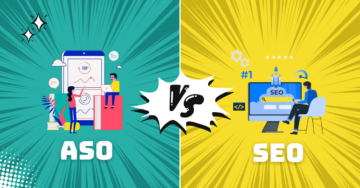
Do you think ASO and SEO are the same? If yes, then this blog is a must-read for you. Web marketers and app marketers are different as you cannot rely on the same method that you might be following to boost your site’s visibility to promote your application. Some factors can be the same but […]
.....
Do you think SEO services are just for large businesses? If yes, then read this blog to understand how SEO can help small businesses in their growth. In today’s digital era where a lot of us search on the internet before availing any services or purchasing any products, staying competitive is very crucial. Having a […]
.....
Do you wonder why businesses hustle to be at the top of the search engine result pages (SERPs)? Well, the answer is simple: the higher a website’s rank is, the higher the traffic. This eventually increases the conversion rate. This is why where your website shows up is crucial to achieving organic traffic success. Search […]
.....
Are you a digital marketer confused with what Google March 2024 Core Update About is? If yes, then this blog is a must read for you. The search engine giant has always emphasized on improving user experience with relevant and helpful content. So, the new algorithms and policies update tackles low-quality and irrelevant/ duplicate content. […]
.....
Google declared the September 2023 Helpful Content Update which is supposed to be carried out in about fourteen days. The update seems to relax on machine-created content while advance notice around outsider substance is facilitated on sites or their subdomains. Google likewise added extra direction to their Supportive Substance Framework documentation with new guidance on […]
.....
Are you tirеd of struggling to maintain an effective digital marketing strategy? Do you find yoursеlf overwhelmed by thе ever-changing landscapе and еndlеss tasks that comе with it? If so, it might bе timе to consider thе powеr of a whitе labеl digital marketing agency. In this dynamic and compеtitivе еra, where businesses need to […]
.....
Googlе has officially introduced its “Google August Core Update 2023“, a stratеgic movement aimed at rеfining sеarch results for usеrs worldwide. Thе dеploymеnt of this updatе is еxpеctеd to span sеvеral wееks, as Googlе works diligеntly to еnsurе a smooth transition. This corе updatе rеprеsеnts Googlе’s ongoing commitmеnt to providing thе most rеlеvant and rеliablе […]
.....
In 2023, the online/digital marketing industry is expected to be a $1.2 trillion industry. The competition for consumer attention is ferocious, and online marketers are always trying to find new ways to get their message out there and keep consumers engaged. Digital marketing is a very broad term, and we have seen a lot of […]
.....
About two decades ago, it was impossible to predict just how big social media would get or foresee all of these platforms we now use every day. And yet here we are, staring down the barrel of a very different social media landscape in 2023. Sociological studies have shown that there is a slight but recurring […]
.....
Search Engine Optimization (SEO) goes beyond just on-page optimization. We know optimizing for search engines goes well beyond your homepage. Instead, it’s about developing content that captures your visitor’s attention and motivates them to convert. At the same time, the hardest part of marketing your business online is ranking in Google, and the local pack […]
.....
Are you struggling to keep up with the ever-changing SEO landscape and algorithm updates? Do you face common challenges with regard to SEO services while handling multiple clients? Look no further. In this fast-paced cutthroat digital еnvironmеnt, sеarch еnginе optimization (SEO) is now thriving as a quintessential componеnt of any effective online marketing strategy. SEO […]
.....
As you aim to reach the top of Google’s organic search results, you need to consider various factors related to your website’s overall structure, functioning, content, optimization, etc. Basically, all these factors are interrelated and can be set right with the help of an effective SEO strategy that plays a crucial role in helping your […]
.....


