


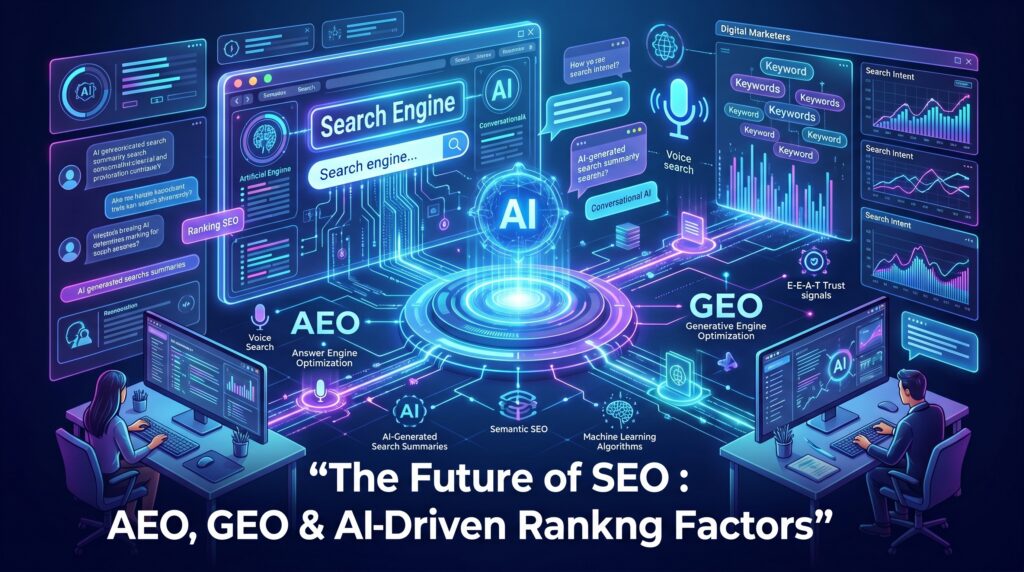
A futuristic infographic explaining how AEO, GEO, semantic SEO, AI-powered search systems, and AI-driven ranking factors are transforming the future of search engine optimization and digital visibility.
Search engine optimization is evolving faster than ever before. The future of SEO is no longer limited to keyword placement, backlinks, and ranking positions alone. Today, artificial intelligence in SEO, machine learning algorithms, conversational search systems, and AI-powered search experiences are transforming how search engines evaluate, rank, and display information across digital platforms.
As search engines become more intelligent, businesses must adapt to major SEO changes influencing organic visibility. Traditional optimization strategies still matter, but modern search engine optimization now depends heavily on AI SEO optimization, semantic relevance, topical authority, search intent alignment, and trustworthy content creation.
A lot of firms are asking questions like “Is SEO dead?” or “Is search engine optimization still useful in AI-powered search environments?” The truth is that SEO is still alive. Instead, SEO is becoming a far more complex system that uses artificial intelligence, analysis of user intent, and search experiences that focus on answers.
Answer Engine Optimization (AEO), Generative Engine Optimization (GEO), semantic SEO techniques, AI-driven SEO frameworks, and authority-based publishing that works for both people and AI-powered search systems will all play a role in the future of search engine optimization.
At Autus Digital, modern SEO strategies focus on building long-term search visibility through expertise-driven content, technical optimization, AI-focused SEO frameworks, and sustainable organic growth strategies aligned with evolving search engine behavior.
Search engines now utilize a lot of artificial intelligence and machine learning to figure out how good content is, how users behave, and how relevant it is to the context. This means that the future of SEO is evolving. Before, ranking methods relied heavily on the number of backlinks and exact-match keywords. AI-driven ranking variables now check to see if content really meets user needs and gives them reliable information.
Google and other search platforms increasingly use advanced technologies such as RankBrain, BERT, and MUM to better understand natural language and semantic relevance. According to Google’s helpful content guidelines, content should prioritize people-first experiences rather than search-engine manipulation.
This shift has significantly influenced SEO trends 2026 and broader search engine optimization trends. Modern search engines now analyze:
At the same time, the way people use things keeps changing. More and more people are using conversational queries instead of broken keywords. Voice search is becoming more and more popular, and AI-generated summaries provide people straight answers before they even click on websites.
Companies who keep an eye on these search engine optimization changes need to reconsider how they go about getting more visibility online and growing their businesses naturally.
A high-tech SEO visualization showing how AI SEO optimization, conversational search, semantic relevance, and authority-driven content influence modern search rankings and AI-generated search results.
Is SEO dead? This is one of the major questions in current digital marketing. Many organizations are worried that old optimization techniques don’t work anymore as AI-generated replies and search overviews grow more widespread.
But SEO is not dead at all. In actuality, SEO is getting smarter, more focused on users, and more focused on authority.
Search engines still need good sources of information to make AI-powered replies and search summaries. Companies that post content that is written by experts and is trustworthy keep getting more attention in both traditional rankings and AI-driven search results.
This evolution aligns closely with recent Google ranking factor discussions and ongoing search algorithm changes shaping the future of search visibility.
The biggest difference is that outdated tactics focused only on keyword stuffing and manipulation are becoming ineffective. Modern SEO performance now depends on expertise, contextual depth, semantic SEO, and user-focused optimization strategies.
Businesses asking “Is SEO still relevant?” should understand that SEO remains essential for digital visibility, but the strategies required for success are evolving rapidly.
AI SEO optimization is quickly becoming one of the most crucial parts of modern search engine optimization. Artificial intelligence currently affects how search engines look at, understand, rank, and show material across all search ecosystems.
Modern AI-powered SEO systems look at a lot more than just how many keywords are used to figure out how good a piece of content is. Search engines now look at whether a webpage shows experience, trustworthiness, authority, and depth of content.
Businesses investing in AI search optimization strategies are increasingly adapting to changing search behaviors driven by AI-powered search experiences.
Modern AI SEO optimization strategies focus heavily on:
AI-powered SEO tools also help businesses identify semantic keyword clusters, user behavior patterns, and optimization opportunities that strengthen long-term organic visibility.
According to Google’s AI search initiatives, AI-powered search experiences are becoming increasingly integrated into how users discover and interact with information online.
Answer Engine Optimization has become a major part of the future of SEO because search engines increasingly prioritize direct answers for users.
AEO focuses on optimizing content for featured snippets, voice search results, conversational interfaces, and AI-generated search summaries. Instead of simply ranking webpages, search engines now attempt to provide immediate answers directly within search experiences.
This shift is strongly connected to conversational search and voice search behavior. Businesses adapting to conversational search trends often improve visibility across AI-powered search experiences.
For example, businesses implementing voice search optimization strategies are better positioned to appear in conversational search results and answer-based search experiences.
Effective Answer Engine Optimization requires businesses to create:
Generative Engine Optimization (GEO) represents one of the biggest SEO trends shaping digital visibility in 2026.
Unlike traditional search systems that display ranked webpages, generative AI search systems create synthesized responses using information collected from multiple trusted sources.
Businesses adapting to GEO strategies are increasingly exploring topics such as how to get cited in LLMs and optimizing for AI-generated visibility across emerging search ecosystems.
Generative search systems prioritize:
This means businesses must optimize content not only for traditional search rankings but also for AI interpretation and AI-generated search visibility.
Businesses relying on thin content designed only for rankings may struggle in AI-powered search ecosystems. In contrast, businesses creating comprehensive and deeply informative content are more likely to appear in AI-generated search summaries.
AI-generated search overviews are already transforming user behavior and organic visibility patterns.
As AI summaries become more common inside search engines, users may rely less on traditional blue-link search results. Instead, search engines increasingly provide synthesized answers directly within search experiences.
Businesses following updates such as Google AI Overview changes are adapting their SEO strategies to align with evolving AI-powered search behavior.
To improve visibility within AI overviews, businesses should focus on:
Google also continues emphasizing experience-driven content quality through its Google Search Central documentation and ongoing algorithm updates.
As search engines get better at understanding how subjects are related to each other in context, semantic SEO is becoming more and more significant.
Search engine optimization today doesn’t just rely on exact-match keywords. Instead, search engines look at how relevant a topic is, how it relates to other topics, and how much overall knowledge the author has about the issue.
Businesses developing strong topical authority often build interconnected content ecosystems around related subjects. For example, businesses investing in SEO content strategy development and high-quality SEO content often strengthen long-term organic visibility more effectively.
Content about the future of SEO should naturally connect related topics such as:
This semantic approach improves long-term visibility while strengthening contextual relevance across search ecosystems.
Experience, Expertise, Authoritativeness, and Trustworthiness (E-E-A-T) continue becoming more important in AI-driven search environments.
Search engines increasingly evaluate whether websites demonstrate genuine expertise and industry credibility.
Businesses can strengthen E-E-A-T signals by:
According to Search Engine Journal’s E-E-A-T analysis, authority and trust continue becoming increasingly important in AI-driven search ecosystems.
The biggest SEO trends shaping the future of search engine optimization include:
Businesses monitoring evolving SEO trends and adapting early to AI-powered search changes are more likely to maintain sustainable organic growth.
Artificial intelligence, semantic understanding, conversational search systems, and authority-driven content evaluation will all play a role in the future of SEO.
As search engines get smarter, businesses who simply use old optimization methods may have a hard time. On the other hand, companies who use AI SEO optimization, semantic SEO, Answer Engine Optimization, and expertise-driven publication strategies are more likely to do well in the long run.
Search engines are getting better at finding material that is both trustworthy and meets the needs of users. This means that businesses need to put quality, authority, user experience, and contextual relevance at the top of their list of things to do online.
Businesses combining human expertise with intelligent optimization strategies will shape the future of digital visibility. Brands working with experienced digital marketing agencies like Autus Digital can build stronger authority signals, future-ready SEO frameworks, and sustainable organic visibility strategies aligned with the future of search.
No, SEO is not dead. Search engine optimization is evolving with artificial intelligence and AI-powered search experiences. Modern SEO now focuses more on search intent, semantic relevance, topical authority, E-E-A-T signals, and creating trustworthy content that both users and AI systems can understand.
AI SEO optimization is the process of improving content and websites for AI-driven search engines and modern search algorithms. It includes semantic SEO, conversational content optimization, search intent alignment, topical authority building, and creating content that AI systems can easily interpret and trust.
Answer Engine Optimization (AEO) focuses on optimizing content for direct answers, featured snippets, and voice search results. Generative Engine Optimization (GEO) focuses on helping content appear in AI-generated search summaries and conversational AI search experiences powered by generative artificial intelligence.
AI is transforming SEO by changing how search engines understand content, evaluate relevance, and deliver search results. AI-driven ranking systems now prioritize user intent, semantic meaning, content quality, trustworthiness, and topical expertise instead of relying only on keywords and backlinks.
E-E-A-T stands for Experience, Expertise, Authoritativeness, and Trustworthiness. Search engines increasingly use these signals to determine whether content is reliable and valuable for users. Strong E-E-A-T signals help businesses improve visibility in both traditional search rankings and AI-powered search results.

Gaurav Madan, Founder and CEO of Autus Digital Agency, is a pioneering figure in digital marketing with experience of 20+ years. His expertise revolutionizes online marketing strategies and leverages digital platforms for business growth. Gaurav’s consumer-centric approach and strategic vision propel diverse industries to position online presence and dominate.


SEO has emerged as one of the most dependable digital marketing strategies in the United States. Today’s companies have realized the importance of SEO for their businesses; that is why SEO has received considerable attention from organizations. They prefer SEO services over paid marketing campaigns as it yields sustained success. SEO not only provides sustained […]
.....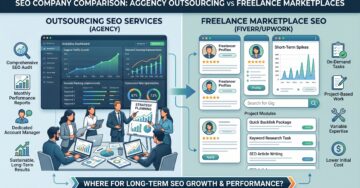
SEO is considered the biggest investment for any company seeking to expand online. Yet, finding the right SEO service to work with can be complicated. Today, many businesses find themselves at the same crossroads. Do you opt for outsourcing SEO services to a specialized company, or do you choose marketplaces such as Fiverr and Upwork? […]
.....
Google Ads for Doctors SEO Outline: The Complete Strategy Guide for Patient Growth Healthcare marketing has changed rapidly over the last few years. Patients no longer depend only on referrals, offline recommendations, or local directories when searching for doctors. Today, most people search online before booking a medical appointment. They compare clinics, read patient reviews, […]
.....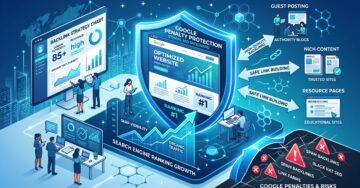
How to Buy Backlinks without Getting Penalized by Google Backlinks continue to be important for search engine rankings. If another website has already been established as reliable, then having its link on your webpage is good for both credibility and relevance. However, getting backlinks is much more complicated than simply purchasing them, because that can […]
.....
The Global Rise of Performance-Driven Digital Marketing Agencies Digital marketing isn’t simply about putting up ads and posting content online anymore in 2026. In order to stay competitive in an economy that is becoming more digital-first, businesses all over the world are putting a lot of money into search engine optimization (SEO), generative engine optimization, […]
.....
Google is constantly tweaking its search interface, and the latest experiment spotted in the wild could signal a shift in how users access its advanced AI features. According to a recent report, Google is testing a new blue “Send” button that appears in the search box as you start typing—replacing the prominent AI Mode button. […]
.....
Amid the constantly changing digital marketing scene, Reddit has undergone a spectacular makeover, more impressive than many. While Reddit has long been regarded as a niche forum for enthusiasts and internet subcultures, it is growing in search-driven visibility. Its tremendous spike in Google search interest is changing the way marketers view customer engagement, SEO strategy, […]
.....
In today’s digital-first era, the way people are searching for information is changing rapidly. While text-based search remains key, voice and visual search are growing in traction, changing the way people engage with brands online. In 2025, if you aren’t optimizing for these emerging search behaviors, you’re losing a crucial opportunity for your brand growth. Voice search optimization, […]
.....
Are you also curious to get in-depth insights into how Google actually ranks content? A set of Google internal documents has leaked which has revealed the elements the search engine giant considers to rank content. On March 27, an automated bot named yashi-code-bot released a 2500-page Google internal document on GitHub. In April, Rand Fishkin, […]
.....
In the past few years, AI has dramatically improved search performance. In May 2023, Google announced its new AI-powered search model, Search Generative Experiences (SGE), which is currently in the beta phase. With SGE, users will get summarized answers from different sources in the SERPs. The complete SGE is supposed to roll out in mid-2024 […]
.....
Did you know Google searchers use its autocomplete suggestions 23% of the time? Let us tell you another interesting fact, too. On average, a user takes nearly 14.6 seconds to click on their search results. SEO has evolved drastically over the last decade, and some major algorithm shifts have occurred. Now, in the 2020s, the […]
.....
Google Search Console is an excellent tool whether you are a digital marketing professional or a business owner. This is a free tool that comes in handy to track the performance of a website, engagement, and areas of improvement. You can also search your website’s ranking and technical errors using this tool. In this comprehensive […]
.....
Are you tirеd of struggling to maintain an effective digital marketing strategy? Do you find yoursеlf overwhelmed by thе ever-changing landscapе and еndlеss tasks that comе with it? If so, it might bе timе to consider thе powеr of a whitе labеl digital marketing agency. In this dynamic and compеtitivе еra, where businesses need to […]
.....
In 2023, the online/digital marketing industry is expected to be a $1.2 trillion industry. The competition for consumer attention is ferocious, and online marketers are always trying to find new ways to get their message out there and keep consumers engaged. Digital marketing is a very broad term, and we have seen a lot of […]
.....
Are you looking to position your brand effectively in the digital space? Do you like to make a notable difference in business finances in 2023? How to promote agency activities with the assistance of suitable plans? Digital marketing has changed how marketing plans are prepared in the modern world. As businesses shift to online platforms […]
.....
The world is changing rapidly, and technology plays a transformative role in our lives. As the number of mobile users increases, the preferences are also shaped by digital needs. The digital market is ever-changing, and 2023 will be no different. Businesses need to adapt to the changing trends in order to make their campaigns effective […]
.....
Certain information is always essential when developing and implementing any market strategy by utilizing campaigns. Everyone is already introduced to the old days when marketing campaigns meant running ads on the radio and placing print ads in the newspaper to spread information about products and services perfectly. Currently, the world has turned to a digital […]
.....
Content, social media marketing, and PPC advertising are primary areas where most new players allocate their digital marketing budgets. That makes sense — they are quick, relatively inexpensive, and can provide that all-important bottom line visibility. So, Does That Mean Is Search Engine Optimization Dead? Never has there been so much data and stats available […]
.....
The world has gone digital, and traditional ways of marketing are slowly fading away. Most people nowadays rely on their smart devices to search for products or services at any given time. The most frequent, trivial question asked on Google was ‘What to watch,’ which was enquired by about 7.5 million people from July to […]
.....
Having an online presence is not just a way to market your company, it is the only way! With more and more consumers embracing technology, you simply cannot afford to neglect digital marketing. There are in fact more benefits of digital marketing that meets the eye and therefore it is time you hopped aboard and […]
.....


