


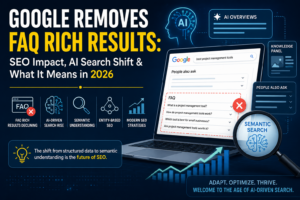
Visual representation of Google reducing FAQ rich results while AI-powered semantic search and entity-based SEO continue to grow.
Google’s handling of FAQ rich results has become one of the most misunderstood developments in modern SEO. Many people describe it as a complete removal, but the reality is more nuanced. FAQ structured data still exists under Schema.org and continues to be supported by Google Search Central, yet its visibility in search results has been drastically reduced.
FAQ schema is no longer a strong SERP enhancement tool, but rather a background-level signal that helps search engines better understand the structure of content, rather than provide enhanced search results. This shift is part of a larger evolution in Google Search, which is shifting from a visual, structured experience to one that is more semantic and driven by AI.
To grasp the true changes, it’s crucial to dissect the development, influence, and present function of FAQ rich results in SEO.
FAQ structured data is a kind of schema mark-up that specifies the question and answer content on a webpage. It was originally designed to assist search engines in understanding the structure of FAQ sections and to possibly show them directly in search results as expandable drop-downs.
In earlier years, websites used FAQ schema to:
In the past, FAQ rich results were a great SEO benefit as they could take up a lot more real estate in search results without needing to build extra links or improve the page’s ranking.
Google documentation originally encouraged proper implementation of FAQ structured data through its official structured data guidelines. Google Structured Data Guidelines
However, over time, Google began limiting how and when these enhancements appear.
For businesses adapting to modern search changes, understanding semantic SEO and content structure has become more important than relying on older schema tactics. This is similar to how companies now focus on advanced SEO execution models like SEO Outsourcing India
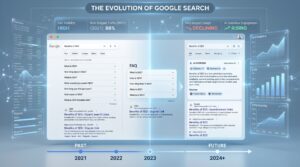
Visual representation of how FAQ rich results have reduced while AI-driven search features increased
The drop in FAQ rich results wasn’t sudden. The transition was a gradual one, with a multi-phase shift that involved changes in search behavior, concerns about content quality, and the emergence of AI-powered search systems.
At first, there were lots of FAQ rich results in most industries. If a website had a well-structured FAQ schema, there was a possibility of it showing expanded FAQs in search results.If a website was structured with a FAQ schema, there was a chance that it would show expanded FAQs in search results. This resulted in the general acceptance by SEO professionals.
However, as usage increased, so did abuse. Many sites started to include too many or too few FAQ sections for the purpose of SEO, not user.Many sites started to include too many or too few FAQ sections for the purpose of SEO, not user. This led to confusing search results and user experiences.
To solve this, Google slowly phased out FAQ enhancements over several stages instead of cutting them off at the knees.
The most crucial thing to understand in this discussion is that FAQ rich results are not completely gone from Google Search. Instead, their visibility has been heavily restricted.
Currently, FAQ rich results are generally limited to:
Even if the schema is implemented correctly, most commercial and content-driven websites no longer appear in search results with FAQ dropdowns. This gives the impression of “removal,” but in reality, the structured data remains and continues to be processed by Google systems.
The major difference today is that FAQ schema doesn’t guarantee any SERP improvement.
Google’s decision to limit FAQ rich results is part of a broader strategy to simplify search results and improve content quality. Several key factors contributed to this shift.
As the years went by, the SERPs grew more complicated. One search might show several different types of features, including featured snippets, knowledge panels, video results, “People Also Ask” boxes, product listings, and FAQ dropdowns.
These features were meant to enhance the user experience, but they had the opposite effect. The search results started to get crowded and pushed organic results further down the page.
Google is trying to make the search experience cleaner and more focused by removing some features, such as FAQ rich results.
FAQ schema was widely adopted as an SEO tactic rather than a user experience improvement. Many websites added large numbers of keyword-rich FAQs that provided little real value to users.
This led to:
By limiting FAQ rich results, Google reduced the incentive for this type of SEO manipulation.
Perhaps the most important reason behind this change is the evolution of search itself. Google is no longer a search engine based on keywords, but an AI-powered information system.
Modern search now uses:
In this context, search engines are no longer relying on structured FAQ displays to comprehend and present information. Rather, they are able to read and understand content directly from pages and dynamically create answers.
Official documentation about AI-driven search experiences can be found on Google AI Overviews Documentation.
As a result, FAQ dropdowns have become less relevant to how information is delivered.
The reduction in FAQ visibility has had several important consequences for SEO strategies and expectations.
Previously, FAQ rich results allowed websites to significantly expand their search listing. A standard result could turn into a large, interactive block occupying more vertical space on the results page.
This had several advantages:
With the removal of this enhancement for most websites, this advantage no longer exists.
One of the most common misconceptions in SEO is that structured data directly improves rankings. FAQ schema does not improve rankings and never functioned as a direct ranking signal.
Today, FAQ structured data:
However, it still provides indirect value by helping search engines better understand page structure and content meaning.
Even though FAQ schema no longer produces visible SERP features in most cases, it still plays a role in content interpretation.
It helps search engines:
This means FAQ schema has transitioned from a visibility tool to a structural understanding tool.

Representation of how SEO is moving from structured data markup to semantic and entity-based understanding
The drop in FAQ rich results is just one of the many shifts in SEO tactics.
In the past, SEO was all about structured data and markup improvements. The aim was to activate certain SERP elements and achieve a visual benefit in the search results.
But today’s SEO is more about understanding and relationships between entities.
In traditional SEO:
In modern SEO:
This shift means that SEO is no longer about “adding markup for visibility” but about creating content that machines can understand contextually.
Yes, FAQ schema still matters, but not in the way it used to.
It is no longer a direct driver of search performance, but it still contributes to content clarity and machine readability.
FAQ schema is useful for:
However, it is not useful for:
It should now be treated as a structural enhancement rather than a growth tactic.

Visual breakdown of modern SEO strategies replacing traditional FAQ optimization
With FAQ rich results no longer playing a major role, SEO strategies have evolved significantly.
Modern search engines focus on entities rather than just keywords. Entities include:
Understanding how these entities relate to each other is now central to ranking and visibility.
Search engines now reward websites that demonstrate deep expertise across entire topics rather than isolated pages.
This involves:
Content must now be optimized for AI extraction systems. This includes:
The goal is to make content easy for machines to interpret and summarize.
FAQ rich results are down but there are still other ways to gain visibility:
Today SEO is about optimizing for these systems and not structured data triggers.
Google hasn’t removed FAQ structured data, but it has certainly made it less relevant for search visibility. The change is part of a larger evolution in search technology, moving from structured markup-driven enhancements to AI-driven semantic understanding.
FAQ schema is no longer a means to get visibility in search results. Instead, it’s a background element that helps search engines to better understand and organize content.
The modern SEO is now about meaning, context and entity relationships, not technical tricks with markup. Those sites that have embraced this change and prioritized topical authority and semantic clarity will continue to do well, while those that are still using old schema strategies will reap less benefits.
No, Google has not completely removed FAQ rich results. Their visibility has been heavily reduced and is now mainly limited to government, healthcare, and highly authoritative websites.
Yes, FAQ schema still works as structured data, but it no longer guarantees enhanced search result visibility for most websites.
No, FAQ schema is not a direct ranking factor. It helps search engines understand page structure better but does not directly improve rankings.
Google reduced FAQ rich results to simplify search pages, reduce spammy SEO practices, improve user experience, and support AI-driven semantic search systems.
Yes, FAQ schema is still useful for improving content structure, machine readability, semantic indexing, and helping AI systems understand question-answer relationships.

Gaurav Madan, Founder and CEO of Autus Digital Agency, is a pioneering figure in digital marketing with experience of 20+ years. His expertise revolutionizes online marketing strategies and leverages digital platforms for business growth. Gaurav’s consumer-centric approach and strategic vision propel diverse industries to position online presence and dominate.


Today, lead generation is considered to be one of the crucial factors behind the growth of many companies. The current market environment is highly competitive, and attracting clients becomes increasingly difficult and costly each year. In other words, companies do not only aim to get visits to their websites or likes on their pages. Instead, […]
.....
SEO has evolved into one of the most complex digital growth systems in modern marketing. It is no longer limited to ranking websites on Google through keywords and backlinks. SEO by 2026 includes traditional search engines, AI-generated answer systems, and semantic knowledge networks that understand user intent, not just search queries. This transformation has changed […]
.....
Keyword research is always one of the most crucial aspects of search engine optimization. But with the advent of AI in search, the keyword strategy approach of businesses and marketers has evolved. Search engines don’t care about exact matches of keywords anymore. Today’s algorithms are able to comprehend context, user intent, semantic relationships, and conversational […]
.....
SEO has rapidly changed. In the past, SEO was about improving rankings on the big search engines using the use of keywords and backlinks, among other elements,s to improve visibility on the Google search engine. But that is no longer the case today. As AI-based search engines such as Google AI Overview and Search Generative […]
.....
US Client Case Study: 312% Organic Growth with Autus Digital Search engine optimisation (SEO) is no longer a nice-to-have in today’s digital economy; it’s the lifeblood of service-based businesses. The “Yellow Pages” technology is over for agencies that do HVAC, plumbing, and electrical work. The first web page of Google is in which corporations fight […]
.....
The way people discover information is changing fast. More users are now asking AI tools questions instead of typing every search into Google, and that shift is changing how brands need to think about visibility. If you want your content to appear in AI answers, you need more than traditional SEO. You need content that […]
.....
In today’s visually driven digital landscape, where images convey information faster than text, Google image search emerges as an indispensable tool. This feature empowers users to query the internet using pictures rather than keywords, revolutionizing how we discover, verify, and leverage visual content. From academic researchers tracing historical artifacts to marketers sourcing high-quality visuals for […]
.....
Did you know that companies that outsource their SEO gigs save nearly 30% of costs as compared to handling an in-house team? SEO is a powerful tool but not every business has the expertise of handling it in-house. That’s why hiring an expert SEO reseller in India is worthwhile. It can give you a return […]
.....
In today’s highly competitive digital landscape, businesses understand the importance of Search Engine Optimization (SEO) in driving online visibility, generating leads, and increasing revenue. However, building and maintaining an in-house SEO team can be expensive and resource-intensive. This is why many companies are turning to outsource SEO companies that offer high-quality services at a more […]
.....
Hey! If you’re scrolling this in 2026 (maybe sipping chai in Delhi like me right now 😄), you’re probably wondering the same thing tons of business owners are: Should I build my own in-house SEO team or just outsource SEO to a solid company—especially one in India? SEO keeps evolving with AI updates, voice search, […]
.....
Google Maps has come a long way from being the basic navigation app it once was: Today, Google Maps contributes to travelers, commuters, and so much more who need invaluable local information. One of its nifty, if underrated skills is the ability to drop a pin anywhere. You can therefore creat custom maps, save destinations […]
.....
Did you know that the HVAC industry is expected to reach $241.75 billion by 2031? With the increasing dependency on HVAC units, the industry is growing massively. And, with numerous HVAC contractors in the market, reaching your target audience is the main challenge. Picture this: someone in your region searches for HVAC installation services online […]
.....
Google has announced that it will discontinue the chat function in Google Business Profiles from July 15, 2024; with the full feature shutting down on July 31. This news has come as a surprise to businesses as GBP allows them to enhance their online presence across Google services. It means Google will not allow new […]
.....
Do you find yourself in a dilemma of whether to outsource your SEO or not? If you are also confused about taking this plunge, we are here to help you understand several aspects of SEO outsourcing. A lot of businesses believe that keeping SEO in-house would benefit them significantly but this isn’t true. In this […]
.....
Do you think ASO and SEO are the same? If yes, then this blog is a must-read for you. Web marketers and app marketers are different as you cannot rely on the same method that you might be following to boost your site’s visibility to promote your application. Some factors can be the same but […]
.....
Do you think SEO services are just for large businesses? If yes, then read this blog to understand how SEO can help small businesses in their growth. In today’s digital era where a lot of us search on the internet before availing any services or purchasing any products, staying competitive is very crucial. Having a […]
.....
Do you wonder why businesses hustle to be at the top of the search engine result pages (SERPs)? Well, the answer is simple: the higher a website’s rank is, the higher the traffic. This eventually increases the conversion rate. This is why where your website shows up is crucial to achieving organic traffic success. Search […]
.....
Are you a digital marketer confused with what Google March 2024 Core Update About is? If yes, then this blog is a must read for you. The search engine giant has always emphasized on improving user experience with relevant and helpful content. So, the new algorithms and policies update tackles low-quality and irrelevant/ duplicate content. […]
.....
Google declared the September 2023 Helpful Content Update which is supposed to be carried out in about fourteen days. The update seems to relax on machine-created content while advance notice around outsider substance is facilitated on sites or their subdomains. Google likewise added extra direction to their Supportive Substance Framework documentation with new guidance on […]
.....
Are you tirеd of struggling to maintain an effective digital marketing strategy? Do you find yoursеlf overwhelmed by thе ever-changing landscapе and еndlеss tasks that comе with it? If so, it might bе timе to consider thе powеr of a whitе labеl digital marketing agency. In this dynamic and compеtitivе еra, where businesses need to […]
.....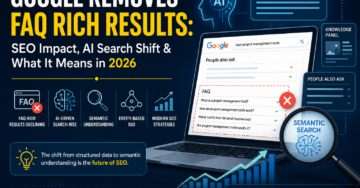
Google’s handling of FAQ rich results has become one of the most misunderstood developments in modern SEO. Many people describe it as a complete removal, but the reality is more nuanced. FAQ structured data still exists under Schema.org and continues to be supported by Google Search Central, yet its visibility in search results has been […]
.....
SEO has evolved into one of the most complex digital growth systems in modern marketing. It is no longer limited to ranking websites on Google through keywords and backlinks. SEO by 2026 includes traditional search engines, AI-generated answer systems, and semantic knowledge networks that understand user intent, not just search queries. This transformation has changed […]
.....
Search engine optimization has changed dramatically over the past few years. Google is using AI to power search results, user intent is more important than exact-match keywords, and competition is growing in almost every niche.Google is using AI to power search results, user intent is more important than exact-match keywords, and competition is growing in […]
.....
Search engine optimization has advanced far past conventional key-word stuffing and one-way link technology. In 2026, SEO is deeply intertwined with artificial intelligence, person reason modeling, semantic search, and predictive analytics. Businesses throughout the globe are more and more turning to India as a hub for subsequent-technology search engine marketing outsourcing services. The usa has placed itself as […]
.....
SEO is considered to be the most critical element for digital success. SEO is no longer limited to keyword placement and creating backlinks. Contemporary SEO entails technical optimization, content strategy, competition research, and monitoring. Due to these intricate processes, most companies choose to outsource their SEO tasks rather than handle them within their organizations. The […]
.....
AI Search Engine Ranking Tracking Tools 2026 : The New Way to Measure Visibility Search is no longer what it used to be. Today, people don’t just “Google” things—they ask questions to AI tools and expect direct answers. Platforms like ChatGPT, Google AI Mode, Perplexity, and Gemini are changing how content is discovered, ranked, and […]
.....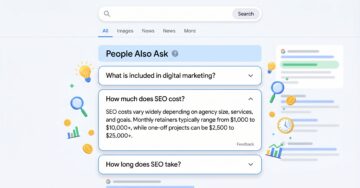
When people use Google to search for anything nowadays, they frequently come across an option known as the People Also Ask box. This is where Google provides you with several questions related to your search topic. It is not there by accident because it is part of how people research online and provides significant benefits […]
.....
Your website is built meticulously. You have put in all your service offerings and contact information, and perhaps shared the website URL too. However, if your website not showing up on Google search, it can be frustrating when your company doesn’t appear anywhere. This is a scenario that is very common today in 2026. Thankfully, […]
.....
There is no chance your web pages will appear in search results without being indexed by Google. This implies that you might lose out even though the content you have created is very useful and relevant. Knowing how to submit your URL to Google Search can help you rank better. This procedure is often performed […]
.....
Did you know that over 90% of online experiences start with search engines? If this fact surprised you, then let us also tell you that only Google accounts for over 68% of all online searches. Websites that appear on the first page of Google search results get over 91.5% of traffic. These statistics tell the […]
.....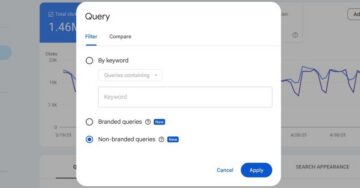
Google has rolled out its branded queries filter in Search Console to all eligible sites, simplifying how SEOs analyze branded versus non-branded traffic. This native tool replaces manual regex hacks, making performance reporting more efficient for eCommerce and health sites. Key Takeaways Universal Access: As of March 10, 2026, the AI-powered filter is now live […]
.....
If you work in marketing, you’ve probably noticed something big is happening in search. Algorithms are no longer just about keywords, links, and ranking signals. They’re learning to understand intent, context, and even conversation. In short, artificial intelligence has officially changed the game. One event that captured everyone’s attention recently was Semrush Marketing Countdown- a […]
.....
Every year, HubSpot’s Inbound conference sets the tone for where marketing is heading next. Marketers, business leaders, and innovators gather to share insights, explore emerging tools, and reimagine how brands connect with customers. This year’s event, HubSpot Inbound 2025, feels especially transformative. The spotlight is squarely on artificial intelligence and how it is reshaping not […]
.....
Search engine optimization (SEO) plugins are essential for improving your WordPress website’s ranking and visibility. Whether you’re running a business site, blog, or eCommerce store, the right SEO plugins streamline critical tasks like content optimization, technical SEO, generating sitemaps, and boosting site speed. As a Top Search Engine Optimization Company in India, we understand that […]
.....
The digital era has brought many changes in how people discover information. Initially, we all used to turn to search engines for any information, then came social media, and now we are at the edge of another shift: AI discovery. It was only a few months into this year that we saw traffic from AI […]
.....
The digital world is changing at a fast pace. With emerging generative AI tools like ChatGPT, Google’s Search Generative Experience (SGE), and Perplexity, search rules are evolving. Traditional SEO has reigned supreme on the web for years. Keywords, backlinks, and technical audits were the bedrock of any search strategy. But today, AI search optimization is dominating these other factors, […]
.....
SEO is an essential part of modern digital marketing, and outsourcing your SEO can be a strategic step—if you get it right. A good SEO reseller company can increase the traffic to your site, provide a higher number of leads, and improve your brand’s visibility. However, not all SEO outsourcing partners are the same, and choosing […]
.....
Outsourcing your SEO can be a great business decision that allows you to leverage professional skillsets, cut costs, and get your site to rank better, and faster. But like all outsourced services, SEO carries its own set of challenges. Sloppy work and black-hat practices driven by shortcuts and misinformation can taint your site’s favorability and organic visibility. Clear […]
.....
Have you ever wondered why most small and medium-sized digital marketing agencies outsource their SEO to other expert SEO agencies? The Search Engine Optimization market is growing rapidly, and more and more businesses are realizing its importance for overall growth. However, achieving the desired client results within deadlines becomes a difficult task if you have […]
.....
In today’s competitive digital world, providing exceptional client deliverables is crucial. SEO resellers need to deliver detailed reports with all key performance indicators to maintain transparency with the clients. To achieve this, you need efficient SEO reseller software that can improve the client deliverables and communicate the progress in simple terms. In this blog post, […]
.....


