


How AI search engines use valuable content while sometimes removing brand recognition.
Artificial intelligence has fundamentally changed how people discover information online. Instead of clicking through multiple search results, users increasingly rely on AI-powered assistants like ChatGPT, Google AI Overviews, Gemini, Claude, Microsoft Copilot, and Perplexity to summarize answers instantly.
This shift has introduced a new phenomenon known as Ghost Citations. Your research, statistics, definitions, or insights may influence an AI-generated answer, yet your company name never appears. In many cases, AI references the information while omitting the original brand entirely.
For businesses investing heavily in SEO, this creates a major visibility challenge. Traditional rankings and backlinks still matter, but brand attribution within AI-generated responses has become equally important. Understanding how AI search systems choose, summarize, and cite content is now a critical part of a modern SEO strategy.
This guide explains what ghost citations are, why they happen, and how businesses can optimize content for better AI attribution.
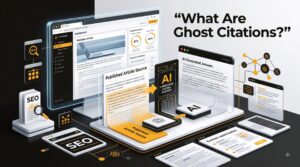
Ghost citations happen when AI uses information without clearly identifying the original publisher.
Ghost citations occur when AI search systems use information from your content to generate answers but fail to mention your brand, website, or business as the original source. Your expertise influences the response, yet the recognition goes missing.
Unlike traditional search engines that display a list of clickable links, AI search engines generate direct answers by combining information from multiple trusted sources. During this process, important details often survive while brand attribution disappears.
For example, an AI assistant may explain “best practices for technical SEO” using ideas from your guide without mentioning your company. Users receive accurate information, but they never discover who originally published it.
This phenomenon has become increasingly common as large language models prioritize answering questions efficiently rather than reproducing complete references.
Ghost citations affect websites across many industries, including healthcare, finance, SaaS, legal services, education, and technology. Businesses producing high-quality educational content are especially likely to experience this issue because AI models frequently rely on authoritative informational resources.
The challenge is no longer just ranking on search engines—it’s ensuring your brand remains visible whenever AI systems reference your expertise.
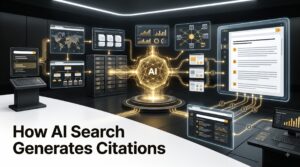
The AI citation process combines content retrieval, analysis, and answer generation.
AI search systems identify trustworthy information from multiple sources, synthesize it into a single answer, and sometimes provide citations. However, the citation often points to information rather than the original brand that created it.
Modern AI search engines operate differently from traditional search algorithms. Instead of ranking pages purely by relevance, AI models attempt to understand concepts, relationships, and factual consistency across numerous sources.
The general workflow looks like this:
| Step | AI Process |
|---|---|
| User asks a question | AI identifies the intent. |
| Content retrieval | Relevant documents are collected. |
| Information extraction | Important facts are identified. |
| Response generation | Multiple sources are combined. |
| Citation (optional) | Some systems include references, while others don’t. |
During synthesis, AI removes repetitive wording, combines similar explanations, and rewrites content into natural language. Unfortunately, this compression often strips away the original publisher’s identity.
Several factors influence whether your content is cited:
The stronger these signals are, the more likely AI systems are to rely on your content—even if they don’t always credit your brand.
AI prioritizes delivering concise, accurate answers. Since brand names are often considered secondary to factual information, attribution may be removed unless the brand itself is central to the topic.
Large language models are designed to maximize usefulness for users. When generating responses, they emphasize information rather than marketing elements.
Imagine your article contains an excellent explanation of semantic SEO. The AI may extract the explanation while omitting your company name because mentioning the publisher doesn’t directly help answer the user’s question.
Several factors contribute to ghost citations:
Generic educational content
Widely applicable definitions and tutorials are frequently rewritten without attribution because similar explanations exist across many sources.
Weak brand entities
If your company lacks strong recognition across the web, AI models are less likely to associate the information with your brand.
Content overlap
When many websites publish similar information, AI synthesizes the shared concepts instead of selecting a single source.
Limited citation behavior
Some AI platforms intentionally minimize references to keep responses concise and readable.
To improve attribution, businesses should create distinctive, experience-based content that includes proprietary frameworks, original research, unique statistics, expert opinions, and clearly identifiable brand assets. These elements are harder for AI systems to separate from the organization that created them.
Ghost citations appear in several forms, ranging from complete omission of the source to indirect references where the information is used but the original publisher is never acknowledged.
Not all ghost citations look the same. Understanding the different types helps marketers identify where their content influences AI-generated answers.
The AI uses your content but never mentions your website, company, or article. Users have no way of knowing where the information originated.
The AI cites a general publication or category but leaves out the specific author or organization responsible for the original work.
Information from several websites is merged into one response. Individual contributors disappear, making attribution almost impossible.
AI completely rewrites original ideas using different wording. Although the language changes, the underlying concepts remain heavily influenced by your content.
These citation patterns explain why many publishers notice increasing impressions within AI search ecosystems while experiencing little corresponding growth in branded traffic or referral visits.
Ghost citations demonstrate that your content is influencing AI-generated answers, but without brand attribution, you lose potential traffic, trust, and conversions. Optimizing for both visibility and recognition is now essential for long-term AI search success.
For years, SEO success was measured through rankings, clicks, impressions, and backlinks. AI search introduces a new metric: influence without recognition.
Imagine your company publishes an in-depth guide on cybersecurity. An AI assistant uses your explanations to answer thousands of user questions but never mentions your brand. Although your expertise shapes the conversation, potential customers remain unaware of who created the original resource.
Ghost citations create several business challenges:
At the same time, ghost citations can also indicate that your content is considered trustworthy enough for AI systems to use. The goal isn’t merely to eliminate ghost citations—it’s to increase the frequency of attributed citations, where AI clearly associates valuable information with your organization.
Businesses that adapt their SEO strategies to include entity optimization, structured data, and original research will be better positioned as AI search continues to evolve.

Optimizing content structure and brand signals helps AI systems recognize original sources.
While you cannot completely control how AI systems attribute information, you can increase the likelihood of brand recognition by creating unique, authoritative, and entity-focused content that is difficult to separate from your organization.
There is no guaranteed method to prevent ghost citations, but several proven strategies improve your chances of being recognized by AI systems.
Ensure your company is consistently represented across your website, business profiles, social platforms, industry directories, and structured data. Consistent naming helps AI models understand your brand as a distinct entity.
AI systems value information that cannot easily be found elsewhere. Surveys, proprietary statistics, case studies, benchmark reports, and industry analyses are more likely to receive attribution than generic educational articles.
Include insights from experienced professionals, first-hand experiences, and practical examples. Unique expertise makes your content more distinguishable from similar resources.
Well-organized pages with descriptive headings, tables, FAQs, definitions, and schema markup make it easier for AI retrieval systems to interpret and reference your content accurately.
Mention your organization naturally throughout educational content where appropriate. Avoid keyword stuffing, but ensure your expertise remains connected to your brand identity.
AI citation optimization focuses on making content accurate, structured, authoritative, and closely connected to a recognizable brand entity so AI systems can confidently reference both the information and its source.
Modern SEO extends beyond keyword optimization. Content should be designed for retrieval, understanding, and attribution.
Best practices include:
| Strategy | Benefit |
|---|---|
| Entity-focused writing | Improves brand recognition |
| Original statistics | Encourages citations |
| FAQ sections | Supports AI answer extraction |
| Schema markup | Enhances machine understanding |
| Internal linking | Reinforces topical authority |
| Content updates | Maintains trustworthiness |
| Consistent branding | Strengthens entity associations |
Additionally, avoid publishing thin or repetitive content. AI systems increasingly reward comprehensive, accurate resources that demonstrate expertise rather than articles written solely to target keywords.
AI-powered search is transforming how information is discovered, summarized, and shared. As users increasingly rely on conversational AI instead of traditional search results, businesses must rethink how they measure content success.
Ghost citations reveal an important reality: your content can influence AI-generated answers without generating corresponding brand recognition. While this demonstrates topical authority, it also highlights the growing importance of entity SEO and citation optimization.
Organizations that consistently publish original research, demonstrate genuine expertise, strengthen their brand entity, and structure content for both users and AI systems will be better positioned to earn attributed citations in the future.
The goal is no longer just to rank on search engines. It is to ensure that when AI shares your expertise, it also remembers who created it. If you’d like help building an AI-ready SEO strategy, talk to our team.
Ghost citations occur when AI systems use information from your content to generate answers but do not mention your brand or website as the original source. Your expertise influences the response, yet users never see who created the information.
Platforms such as Google AI Overviews, ChatGPT, Gemini, Claude, Microsoft Copilot, and Perplexity may summarize information from multiple sources. Attribution practices differ between platforms, but ghost citations can occur across all of them.
Ghost citations do not directly affect traditional search rankings. However, they can reduce brand visibility, referral traffic, and recognition, making it harder to convert AI-generated exposure into measurable business results.
No. AI systems determine how information is summarized and attributed. However, publishing original research, strengthening entity SEO, and creating unique expert content can improve the likelihood of receiving proper attribution.
Traditional citations clearly identify the original source and often include a clickable link. Ghost citations use the information without explicitly naming or linking to the original publisher.
AI systems are designed to answer user questions efficiently. Unless a brand is directly relevant to the query, models often focus on delivering factual information rather than identifying the publisher.
Yes. Schema markup, clear headings, FAQs, and organized content improve machine readability, helping AI systems better understand your content and its relationship to your brand.
Entity SEO helps AI recognize your organization as a trusted and identifiable source. Consistent branding, authoritative mentions, structured data, and topical expertise strengthen these signals and improve attribution opportunities.


SEO is one of the most effective long-term digital marketing strategies, but it rarely delivers overnight success. Many website owners become frustrated because they expect immediate improvements after publishing optimized content or fixing technical issues. In reality, successful SEO is measured through gradual improvements across multiple performance indicators rather than a single metric. So, how […]
.....
Duplicate content is one of the most common technical SEO problems affecting websites of all sizes. It occurs when identical or highly similar content appears on multiple URLs, making it difficult for search engines to determine which version should rank in search results. While Google generally doesn’t apply a direct penalty for duplicate content, it […]
.....
A sudden decline in Google traffic can be one of the most stressful situations for any website owner. A website that previously generated consistent visitors, leads, and revenue may suddenly experience fewer clicks, lower rankings, and declining visibility in search results. However, a traffic drop does not always mean a website is permanently damaged. With […]
.....
Creating a successful B2B SaaS marketing strategy has become more challenging than ever. With increasing competition, longer buying cycles, AI-powered search experiences, and evolving customer expectations, SaaS companies need far more than a great product to achieve sustainable growth. A modern strategy combines SEO, content marketing, product-led growth, demand generation, paid advertising, marketing automation, customer […]
.....
The pharmaceutical industry has become increasingly digital, with healthcare professionals, patients, and researchers relying on search engines to discover medications, treatment options, clinical research, and healthcare providers. As competition intensifies, pharmaceutical companies need specialized SEO strategies that not only improve search visibility but also comply with strict healthcare regulations. Unlike general SEO agencies, top pharmaceutical […]
.....
If your auto repair shop isn’t showing up when potential customers search for terms like “brake repair near me” or “oil change in my city,” you’re likely missing valuable business every day. Most vehicle owners turn to Google before choosing a mechanic, making your online visibility just as important as the quality of your services. […]
.....
Finding trending topics is one of the most effective ways to create content that attracts readers, ranks higher in search engines, and gains visibility across AI-powered platforms. Whether you’re a blogger, SEO professional, marketer, or business owner, understanding what people are searching for helps you publish content at the right time and stay ahead of […]
.....
Businesses have spent years optimizing websites for Google Search, but AI-powered search experiences are changing how people discover brands. Millions of users now ask ChatGPT, Microsoft Copilot, Gemini, Claude, and Perplexity for recommendations instead of browsing search results. These AI assistants summarize information from trusted sources, making it essential to understand whether your business is […]
.....
Search has entered a new era. Instead of presenting users with a list of web pages, AI-powered search engines now provide direct, conversational answers. Platforms such as Google AI Overviews, ChatGPT, Gemini, Microsoft Copilot, Claude, and Perplexity are changing how people discover information online. As a result, businesses can no longer rely solely on traditional […]
.....
Search behavior has changed dramatically over the last few years. Instead of relying only on traditional search engines, users now seek authentic discussions, real-world experiences, and community-driven recommendations before making decisions. This shift has transformed Reddit from a discussion platform into one of the most influential sources for search visibility. Today, Google frequently ranks Reddit […]
.....
Many advertisers celebrate when their PPC dashboard shows thousands of clicks. Unfortunately, clicks alone don’t generate revenue. If your PPC Campaign Generates Clicks but produces few or no leads, you’re paying for traffic that isn’t converting. This situation is more common than many businesses realize. A campaign may have an excellent Click-Through Rate (CTR), low […]
.....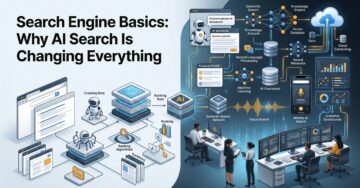
Search engines have transformed dramatically over the past two decades. Early search engines relied heavily on matching keywords, backlinks, and page authority to determine rankings. Today, artificial intelligence is redefining how information is discovered, interpreted, and delivered. Instead of simply displaying a list of blue links, modern AI-powered search engines analyze user intent, understand context, […]
.....
How to Sell on Amazon: The Complete Guide (2026) Selling on Amazon is among the top approaches known today to start up an online business. Amazon has millions of buyers visiting every single day looking for products in all kinds; you can sell anything on Amazon. This provides new sellers a wonderful opportunity to continue […]
.....
Google Search Console — never a better SEO tool for website owners and marketers. It enables better insights into how your website is performing, tracks clicks and impressions on search engines for relevant queries, and offers valuable indexing information. In addition to Search Ads 360, Google has now rolled out reporting for social and video […]
.....
Google Lighthouse has long been one of the most trusted tools for developers, SEO professionals, and website owners because it evaluates website performance, accessibility, SEO, and overall quality. In 2026, Google introduced a new Lighthouse category called Agentic Browsing, reflecting the growing role of artificial intelligence in web interactions. Unlike traditional search crawlers that mainly […]
.....
Why You Need to Spot Fake Online Reviews The buy-before-buying: where to eat, which service to choose — people make all choices based on online tips. Before spending their money, most people read reviews. Good reviews instil trust in the mind; bad reviews force users not to buy. But not every review is real. Whatever […]
.....
Google reviews are one of the most important parts of local SEO. They help businesses build trust, improve local rankings, and attract new customers. Recently, many business owners noticed that some Google reviews suddenly disappeared. This created confusion and concern, especially for local businesses that depend on customer feedback. In most cases, Google is not […]
.....
The impact of your online reputation and perception on you/your business cannot be understated. Unwanted search results on Google can affect the trust of an individual, a professional body or company and can even lose business opportunities. Whether its news post or bad review, even an irrelevant page, removal or suppression of harmful search results […]
.....
In 2026, your online reputation is one of the most important digital assets. If you have a company, working freelance, creating the startup you will want to build a personal brand and earlier than that people will be searching online before making decisions. They read reviews, look at your website, visit social networks and consider […]
.....
Selling products online has become one of the best ways to build a business. Among all eCommerce platforms, Amazon stands out because millions of customers visit it every day. Whether you want to sell handmade items, private-label products, or branded goods, opening an Amazon store can help you reach a massive audience. The good news […]
.....


