


Understanding why Google reviews are disappearing and how review policies affect local SEO.
Google reviews are one of the most important parts of local SEO. They help businesses build trust, improve local rankings, and attract new customers. Recently, many business owners noticed that some Google reviews suddenly disappeared. This created confusion and concern, especially for local businesses that depend on customer feedback.
In most cases, Google is not removing reviews by mistake. The company has updated its review policies and is now using stronger systems to detect fake, spam, and policy-violating reviews. As a result, some reviews may be filtered out, hidden, or removed completely.
In this guide, you will learn why Google reviews are disappearing, what the updated review policies mean, and how these changes can affect your local SEO.
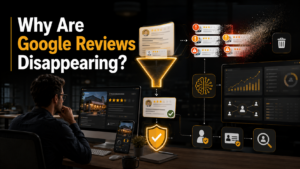
How Google’s review filtering system removes suspicious reviews.
Google reviews can disappear for several reasons. The most common reason is that Google believes the review does not follow its policies.
Google is becoming much stricter about fake reviews. Reviews that appear suspicious may be removed automatically.
Examples include:
Google does not allow businesses to offer rewards in exchange for positive reviews.
Not allowed:
If Google detects incentivized reviews, they may be removed.
Review gating happens when businesses ask only happy customers to leave reviews while preventing unhappy customers from reviewing.
Example:
This practice violates Google’s policies and can lead to review removals.
Reviews may also disappear if the reviewer breaks Google’s rules.
Examples include:
If the reviewer deletes their Google account, the review may disappear as well.
Google has increased its focus on review quality and authenticity.
Authentic reviews strengthen local SEO and business credibility.
In the past, businesses often focused on getting as many reviews as possible.
Now, review quality and authenticity matter much more.
A smaller number of genuine reviews can be more valuable than hundreds of suspicious reviews.
If a business receives dozens or hundreds of reviews in a very short time, Google may investigate.
Natural review growth is usually safer.
Google looks at many trust signals, including:
Businesses that rely on fake reviews may see:

Ethical review strategies help build lasting trust and stronger local SEO.
The safest strategy is to ask real customers for honest feedback.
Good examples:
Replying to reviews shows that your business is active and engaged.
Best practice:
Check your profile regularly.
Look for:
Sometimes yes, but not always.
If you believe legitimate reviews were removed, you can:
However, Google does not guarantee restoration.
Google is clearly moving toward quality over quantity.
Businesses that focus on real customer experiences are likely to benefit the most.
The strongest long-term strategy is:
Google reviews are disappearing because Google is enforcing stricter review policies and improving its ability to detect fake, spam, and policy-violating reviews. Businesses that used aggressive review tactics may see more reviews removed. For local SEO, the focus is shifting from review quantity to review quality, authenticity, and customer trust. The safest and most effective strategy is to earn genuine reviews from real customers and maintain a strong reputation over time.
Google reviews may disappear if they violate Google's review policies. Common reasons include fake or spam reviews, incentivized reviews, offensive content, review gating, or deleted Google accounts.
Yes. Sometimes genuine reviews are mistakenly filtered by Google's automated systems. If this happens, the reviewer can check their account, update the review, or the business can contact Google Business Profile support.
Yes. Losing genuine reviews may impact customer trust and local search visibility. However, Google now values authentic, high-quality reviews more than simply having a large number of reviews.
Google does not allow fake reviews, paid reviews, incentivized reviews, review gating, spam, offensive content, or reviews that promote products or services.
In some cases, yes. If a legitimate review was removed by mistake, the customer may be able to edit and repost it, or the business can contact Google Business Profile support for assistance. Restoration is not guaranteed.
Ask real customers to leave honest feedback after their experience. Never buy reviews, offer rewards, or ask only satisfied customers to post reviews.

Gaurav is working on various verticals like IT & Software Solutions | Digital Marketing | E-Commerce | BPO | Outsourcing | Offshoring | Global Deliveries | Exports | Education. Gaurav believes in CHANGE, which is constant throughout the LIFE so be with the CHANGE Gaurav is having, In-depth experience in IT Solutions, Offshoring, Internet Branding, Sales & Marketing, Managing New Projects & Processes, Solution Designing and Transitioning of New International and Domestic business engagements. Proficient at managing & leading teams to run successful operations & experienced in developing procedures, service standards, client satisfaction using standard frameworks for business excellence.

SEO is one of the most effective long-term digital marketing strategies, but it rarely delivers overnight success. Many website owners become frustrated because they expect immediate improvements after publishing optimized content or fixing technical issues. In reality, successful SEO is measured through gradual improvements across multiple performance indicators rather than a single metric. So, how […]
.....
Duplicate content is one of the most common technical SEO problems affecting websites of all sizes. It occurs when identical or highly similar content appears on multiple URLs, making it difficult for search engines to determine which version should rank in search results. While Google generally doesn’t apply a direct penalty for duplicate content, it […]
.....
A sudden decline in Google traffic can be one of the most stressful situations for any website owner. A website that previously generated consistent visitors, leads, and revenue may suddenly experience fewer clicks, lower rankings, and declining visibility in search results. However, a traffic drop does not always mean a website is permanently damaged. With […]
.....
Artificial intelligence has fundamentally changed how people discover information online. Instead of clicking through multiple search results, users increasingly rely on AI-powered assistants like ChatGPT, Google AI Overviews, Gemini, Claude, Microsoft Copilot, and Perplexity to summarize answers instantly. This shift has introduced a new phenomenon known as Ghost Citations. Your research, statistics, definitions, or insights […]
.....
Creating a successful B2B SaaS marketing strategy has become more challenging than ever. With increasing competition, longer buying cycles, AI-powered search experiences, and evolving customer expectations, SaaS companies need far more than a great product to achieve sustainable growth. A modern strategy combines SEO, content marketing, product-led growth, demand generation, paid advertising, marketing automation, customer […]
.....
The pharmaceutical industry has become increasingly digital, with healthcare professionals, patients, and researchers relying on search engines to discover medications, treatment options, clinical research, and healthcare providers. As competition intensifies, pharmaceutical companies need specialized SEO strategies that not only improve search visibility but also comply with strict healthcare regulations. Unlike general SEO agencies, top pharmaceutical […]
.....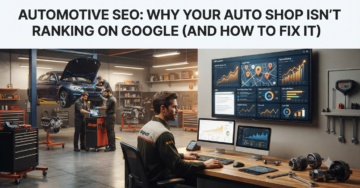
If your auto repair shop isn’t showing up when potential customers search for terms like “brake repair near me” or “oil change in my city,” you’re likely missing valuable business every day. Most vehicle owners turn to Google before choosing a mechanic, making your online visibility just as important as the quality of your services. […]
.....
Finding trending topics is one of the most effective ways to create content that attracts readers, ranks higher in search engines, and gains visibility across AI-powered platforms. Whether you’re a blogger, SEO professional, marketer, or business owner, understanding what people are searching for helps you publish content at the right time and stay ahead of […]
.....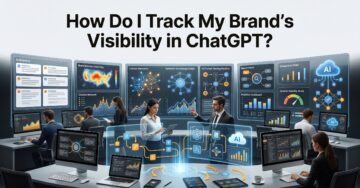
Businesses have spent years optimizing websites for Google Search, but AI-powered search experiences are changing how people discover brands. Millions of users now ask ChatGPT, Microsoft Copilot, Gemini, Claude, and Perplexity for recommendations instead of browsing search results. These AI assistants summarize information from trusted sources, making it essential to understand whether your business is […]
.....
Search has entered a new era. Instead of presenting users with a list of web pages, AI-powered search engines now provide direct, conversational answers. Platforms such as Google AI Overviews, ChatGPT, Gemini, Microsoft Copilot, Claude, and Perplexity are changing how people discover information online. As a result, businesses can no longer rely solely on traditional […]
.....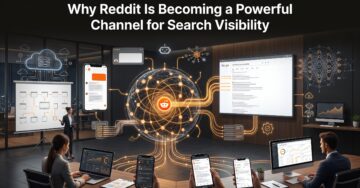
Search behavior has changed dramatically over the last few years. Instead of relying only on traditional search engines, users now seek authentic discussions, real-world experiences, and community-driven recommendations before making decisions. This shift has transformed Reddit from a discussion platform into one of the most influential sources for search visibility. Today, Google frequently ranks Reddit […]
.....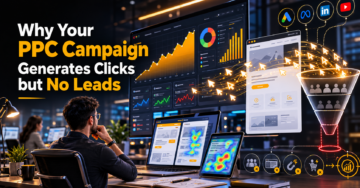
Many advertisers celebrate when their PPC dashboard shows thousands of clicks. Unfortunately, clicks alone don’t generate revenue. If your PPC Campaign Generates Clicks but produces few or no leads, you’re paying for traffic that isn’t converting. This situation is more common than many businesses realize. A campaign may have an excellent Click-Through Rate (CTR), low […]
.....
Search engines have transformed dramatically over the past two decades. Early search engines relied heavily on matching keywords, backlinks, and page authority to determine rankings. Today, artificial intelligence is redefining how information is discovered, interpreted, and delivered. Instead of simply displaying a list of blue links, modern AI-powered search engines analyze user intent, understand context, […]
.....
How to Sell on Amazon: The Complete Guide (2026) Selling on Amazon is among the top approaches known today to start up an online business. Amazon has millions of buyers visiting every single day looking for products in all kinds; you can sell anything on Amazon. This provides new sellers a wonderful opportunity to continue […]
.....
Google Search Console — never a better SEO tool for website owners and marketers. It enables better insights into how your website is performing, tracks clicks and impressions on search engines for relevant queries, and offers valuable indexing information. In addition to Search Ads 360, Google has now rolled out reporting for social and video […]
.....
Google Lighthouse has long been one of the most trusted tools for developers, SEO professionals, and website owners because it evaluates website performance, accessibility, SEO, and overall quality. In 2026, Google introduced a new Lighthouse category called Agentic Browsing, reflecting the growing role of artificial intelligence in web interactions. Unlike traditional search crawlers that mainly […]
.....
Why You Need to Spot Fake Online Reviews The buy-before-buying: where to eat, which service to choose — people make all choices based on online tips. Before spending their money, most people read reviews. Good reviews instil trust in the mind; bad reviews force users not to buy. But not every review is real. Whatever […]
.....
The impact of your online reputation and perception on you/your business cannot be understated. Unwanted search results on Google can affect the trust of an individual, a professional body or company and can even lose business opportunities. Whether its news post or bad review, even an irrelevant page, removal or suppression of harmful search results […]
.....
In 2026, your online reputation is one of the most important digital assets. If you have a company, working freelance, creating the startup you will want to build a personal brand and earlier than that people will be searching online before making decisions. They read reviews, look at your website, visit social networks and consider […]
.....
Selling products online has become one of the best ways to build a business. Among all eCommerce platforms, Amazon stands out because millions of customers visit it every day. Whether you want to sell handmade items, private-label products, or branded goods, opening an Amazon store can help you reach a massive audience. The good news […]
.....


